
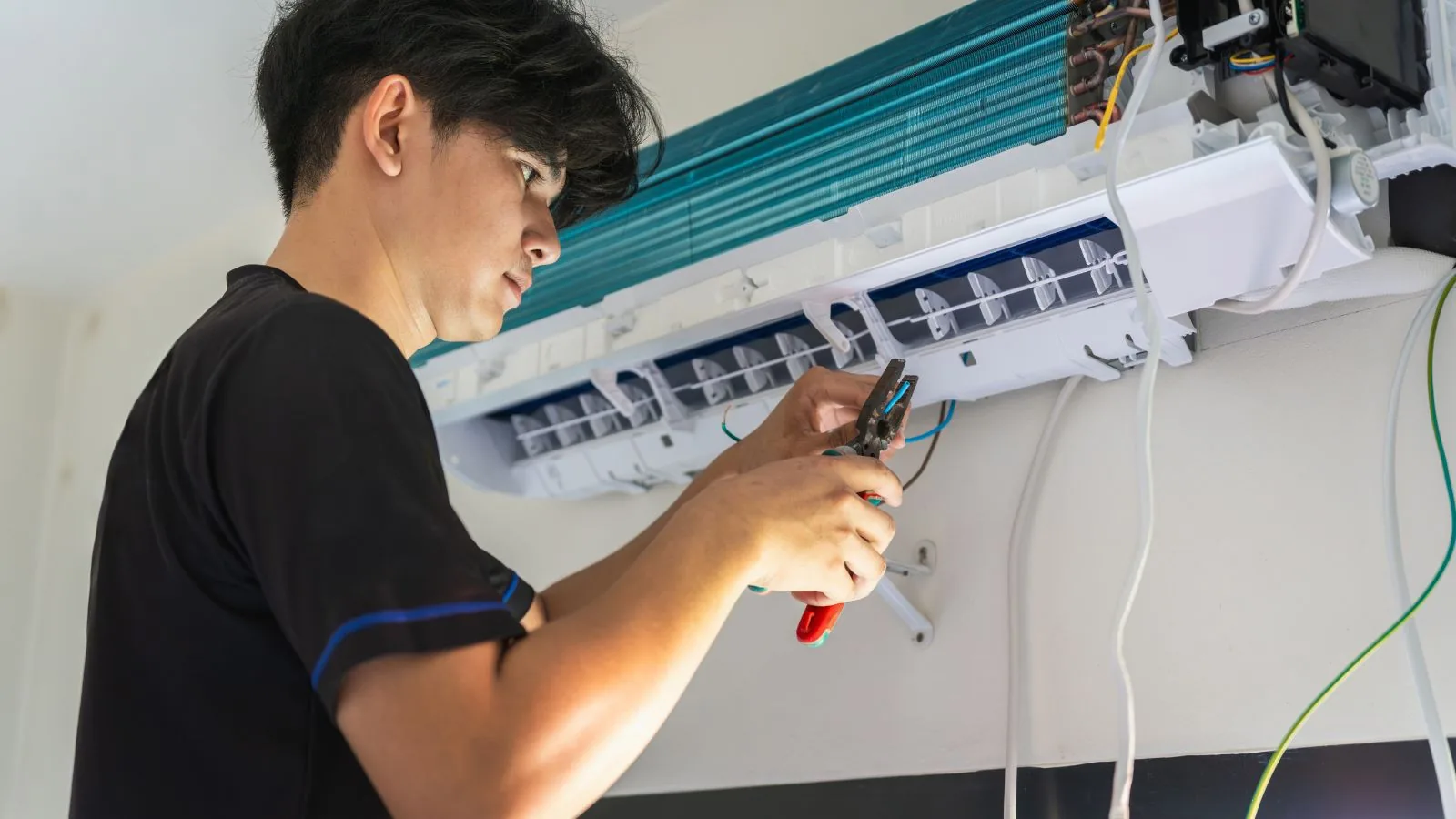
An air conditioner that leaks inside the building is usually dumping condensation through a blocked drain line. The leak often starts slowly, and the stain on a ceiling or closet wall may appear weeks after the problem began. The 24/7 line is open at night and on weekends if a drip turns into a spill.
How AC systems leak water
Cooling a home pulls moisture from the air, and that water leaves through a condensate drain. When algae or debris blocks the line, or the drain pan rusts through, the water backs up and overflows. Frozen evaporator coils that melt can also drip more than the pan can hold.
Common signs are a damp ceiling below an air handler, a stained closet wall, a musty smell near the unit, a wet floor beside a wall unit and a drain pan with standing water. People often describe it as a condensation line that has been backing up.
What to do right away
- Turn the cooling system off at the thermostat so it stops producing water.
- Dump or soak up water in the drain pan if it is accessible and dry to reach.
- Move belongings away from the wet wall or closet floor.
- Photograph the unit, the pan and the stains.
- Call an HVAC technician to clear or replace the line, and call restoration to dry what got wet.
Hidden moisture from AC leaks
A slow condensate leak wets insulation and framing before it stains the finish. Moisture mapping with a meter and thermal camera shows how far it spread, which matters because a small stain can sit above a much larger wet area. Wet insulation often has to come out, and the surrounding cavity is dried with air movers and dehumidifiers.
| Where the unit is | Where the water shows up | What to check |
|---|---|---|
| Attic air handler | Ceiling stains below | Insulation and joists above the ceiling. |
| Closet air handler | Closet floor and adjacent wall | Baseboards, drywall and subfloor. |
| Wall or window unit | Floor and wall beneath it | Wall cavity and flooring edge. |
| Rooftop or exterior condenser | Interior ceiling near the roof | Roof penetrations and drain lines. |
AC leaks and mold
Mold needs moisture, and a persistent condensate leak provides it. The New Jersey Department of Health notes that mold spores need water to grow and that problems usually occur when there is excess water. The first step is to fix the water source and dry the materials. If a damp area has stayed wet for more than a couple of days, the mold remediation page explains how assessment and removal work.
Water still spreading while you read? The 24/7 line is open now.
Call (844) 950-6900AC leaks in Weehawken buildings
Apartment and townhouse buildings commonly use ducted systems with air handlers in closets or ceiling spaces. Those units sit close to finished surfaces, so a drain backup reaches drywall quickly. Ask your building manager whether the drain lines are maintained on a schedule.
In summer, humid weather means the system produces more condensate, so a marginal drain is likelier to fail on a hot week than in spring. A technician can clear the line and, if needed, add a float switch that shuts the system off when the pan fills.
Preventing the next condensate leak
Condensate lines clog slowly. A yearly cleaning by an HVAC technician, a float switch on the drain pan and a quick look at the pan during the first hot week of the year catch most problems before they reach a ceiling. If your unit sits above finished space, a secondary pan with its own drain is worth asking about.
Cost factors and insurance
| Factor | What it changes |
|---|---|
| How long it leaked | Weeks of slow water wets more materials than a single overflow. |
| Insulation and ceiling type | Wet insulation is usually replaced. |
| Area affected | A closet differs from a ceiling across rooms. |
| Drying days | Equipment time follows readings. |
Scope and price are explained before work starts. Insurers often treat sudden overflows differently from long running leaks and lack of maintenance, so read your policy and keep service records. See ceiling water damage repair if the main damage is overhead.
The published reference behind the work
The industry reference for water damage work is ANSI/IICRC S500, the published standard for professional water damage restoration. It groups water by source and contamination, and condensate from an air conditioner is usually clean at first. That grouping can change if the water sits in insulation or a ceiling cavity, which is why a reading matters more than the label on the leak.
Questions people ask
Do you handle AC leak emergencies at night or on weekends in Weehawken?
The line is open 24 hours, and crews can be sent the same day when available if water is spilling. For a slow drip, turn the cooling system off and call, and we will tell you what can wait until morning.
Will turning the AC off stop the leak?
It stops new condensation. Water already in the pan or lines can still drain out, so soak up what you can and keep the system off until the line is cleared.
Who clears the drain line?
An HVAC technician clears or replaces the line. Restoration crews dry the structure the water reached.
How do I know if hidden moisture remains?
Moisture meters and thermal imaging check behind finishes without tearing everything open. Readings also show when materials are dry.
Ready to talk it through? Call the line any hour.
Call (844) 950-6900