
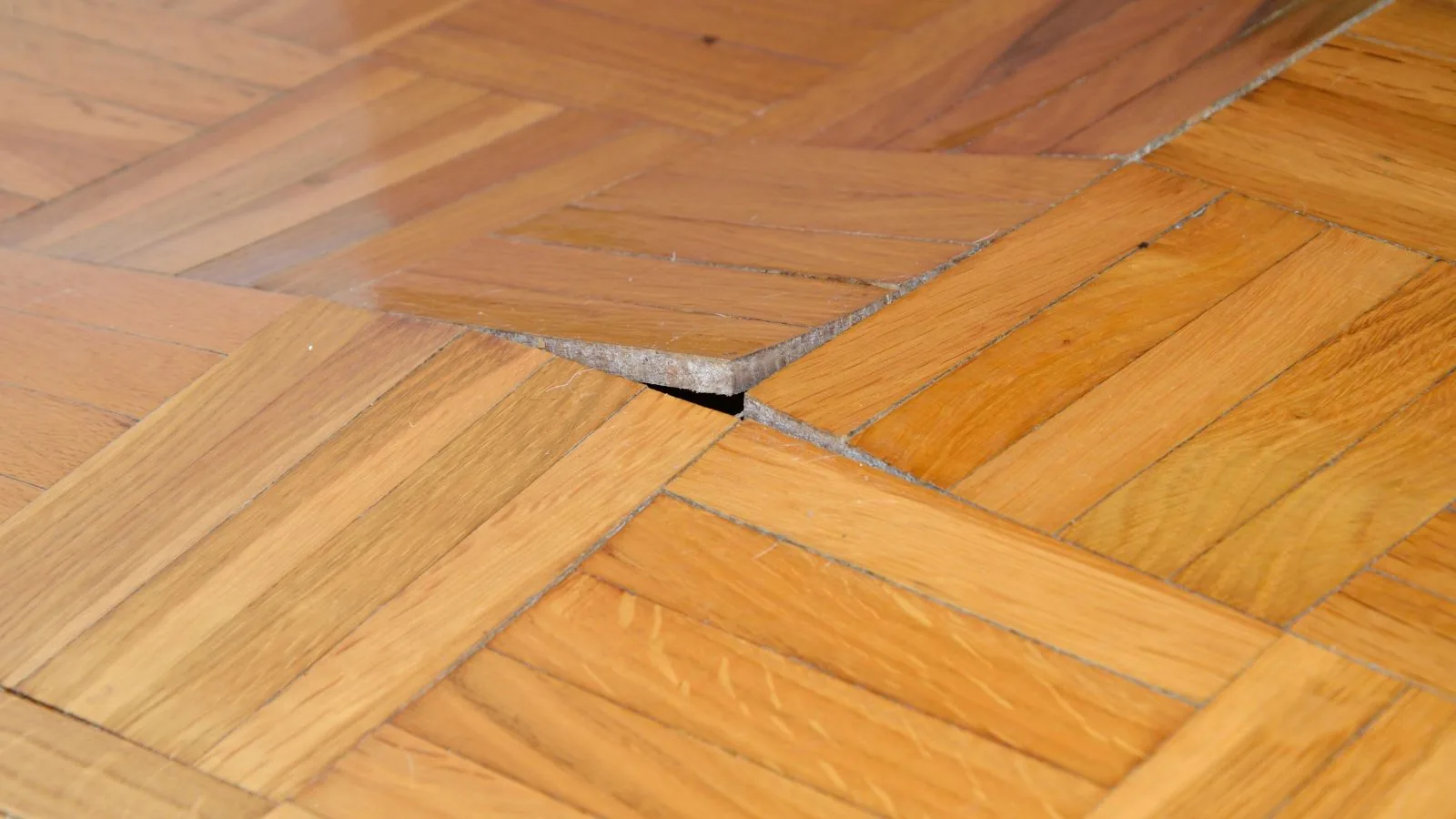
Hardwood absorbs water along its length and across its edges, and it responds by swelling. The first sign is often cupping, where board edges rise above the center. If the source is still active, call the 24/7 line, because every hour of wetness increases the chance that boards need replacing.
Larger homes with wood floors, such as those described on the King's Bluff page, can have several rooms affected by one leak.
Cupping, crowning and buckling explained
| What you see | What it means | Usual outlook |
|---|---|---|
| Cupping (edges higher than centers) | Moisture came from below or the board absorbed water | Often improves after controlled drying, sometimes needs light sanding. |
| Crowning (centers higher than edges) | Often after a floor was sanded while still wet, or from surface water | May settle after drying. |
| Buckling (boards lifting from the subfloor) | Large water exposure, fasteners pulled loose | Often requires board removal and replacement. |
| Black or dark staining | Water sat on the wood for a long time | Boards may need replacement. |
| Gaps between boards after drying | Boards shrank as they dried | Often cosmetic, can be refilled. |
Walnut, oak, maple and engineered boards behave differently. Engineered floors have a plywood core that can delaminate, while solid wood can often be dried in place if it was caught early. Nobody can promise outcomes before measuring, and the readings after a few days of drying decide what stays.
What to do right now
Steps for a wet wood floor
- Stop the source and soak up standing water with towels, then a wet vacuum.
- Lift rugs, furniture legs and anything that holds water against the floor.
- Do not use heat guns, hot fans or sanders. Fast drying makes cupping worse.
- Leave air conditioning on and keep humidity steady.
- Photograph the floor and the source, then call the line for moisture readings.
How crews dry hardwood
Drying hardwood is slower and more controlled than drying drywall. Crews use specialized mats or panels that pull moisture through the boards, dehumidifiers to keep air dry and moisture meters to track progress. Pulling a few boards at the edge can let air reach the subfloor if it is wet underneath.
Measure
Meters check moisture in the boards and the subfloor to learn how deep the water went.
Dry with control
Drying mats, air movers and dehumidifiers pull moisture out gradually.
Monitor
Readings are tracked until boards reach the same moisture content as unaffected wood nearby.
Decide
Once dry, boards are sanded and refinished, or replaced where they stayed damaged.
The most common sources are appliance failures and plumbing leaks. If a washer valve or dishwasher line failed, see appliance leak water damage, and if a condensate line backed up near a floor see AC leak water damage repair.
Water still spreading while you read? The 24/7 line is open now.
Call (844) 950-6900Hardwood in Weehawken homes
Older houses, including those on the Palisades ridge in The Heights and Uptown, often have original strip hardwood over wood subfloors. Those floors can be refinished several times, which helps after drying. Newer apartments and condos are more likely to have engineered wood or laminate, which reacts differently to water.
In condos, a leak from a unit above can soak a floor you did not expect. Tell your building manager early, and ask which floor assembly you have, because a floating floor over a concrete slab dries differently from nailed boards over joists.
Cost factors and insurance
| Factor | What it changes |
|---|---|
| Wood type and finish | Solid and engineered products behave differently. |
| Time wet | Longer exposure raises the chance of replacement. |
| Area | A room versus an entire level changes equipment and labor. |
| Drying days | Hardwood often needs longer than drywall. |
| Refinishing or replacement | Sanding and staining are a separate scope. |
Scope and price are explained before work starts. A sudden leak is often covered, while slow seepage and neglect often are not. Matching existing finish is a common repair question, so ask your insurer how it handles it.
The published reference behind floor drying
Hardwood is a dense, slow drying material, and ANSI/IICRC S500, the published standard for professional water damage restoration, accounts for that by classifying jobs by how much water the materials hold. The practical result is that crews track moisture in boards and subfloor over days instead of judging by how the surface looks.
Questions people ask
Can cupped hardwood be saved?
Often, yes, if drying is controlled and the floor was not wet for a long time. Some cupping flattens on its own and some needs light sanding. Readings decide.
Why not sand right away?
Sanding wet wood locks in distortion and can cause crowning when boards finish drying. Wait for readings that show the floor is dry.
Do you handle hardwood emergencies after hours?
The line is open 24 hours. If water is active, stop the source and call, and crews are sent the same day when available.
Is engineered wood different?
Yes. Engineered boards can delaminate, so they are sometimes removed sooner. A moisture reading and a close look at the edges tell the story.
Ready to talk it through? Call the line any hour.
Call (844) 950-6900