
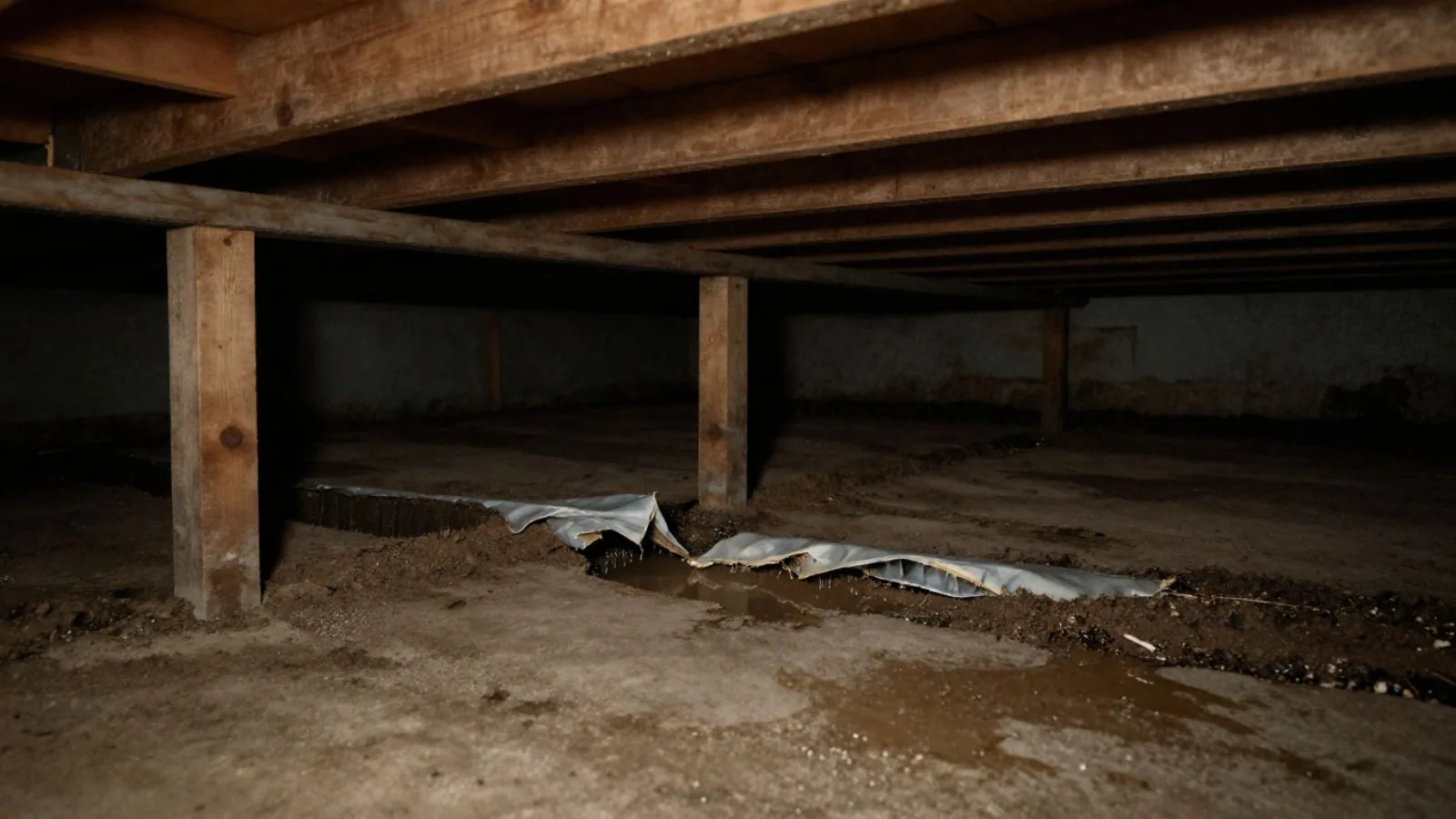
A crawl space is the low void under a floor, and water there is easy to miss. It soaks insulation, wets joists and subfloor from below and raises humidity throughout the building. The 24/7 line is open for active water, and an assessment can be scheduled for a damp space that has not flooded.
Why water in a crawl space is a bigger problem than it looks
Moisture below a floor moves up into wood framing and the living space. Insulation holds water against the underside of the floor and can sag, and a torn vapor barrier lets ground moisture rise. Standing water can come from a plumbing leak, groundwater after heavy rain, a failed sump or a drainage problem at the foundation.
Safety before you look
- Do not enter a flooded crawl space. Hidden wiring and low clearance are real hazards.
- Turn off power to the area only if you can reach the panel safely and dry.
- Shut off the main water if a plumbing line is the source.
- Photograph from the access point with a flashlight and note the water level.
- Call the line and describe the access and the depth.
What restoration involves
Pump and extract
Submersible pumps and extraction units remove standing water and wet debris.
Assess materials
Moisture meters check joists and subfloor. Wet insulation and torn vapor barrier are evaluated.
Remove and dry
Saturated insulation comes out, and air movers and dehumidifiers dry the void and framing.
Document and recommend
Readings are logged. If the water source needs fixing, you are told what trade handles it.
Honest limits apply. Restoration removes the water and dries the space, but it is not waterproofing, grading or foundation repair. If groundwater keeps returning, a contractor who handles drainage should look at the cause.
Crawl spaces in Weehawken
Whether your building has a crawl space depends on its age and design, and many have full basements instead. Some older houses and additions have low access areas under porches, sunrooms and rear additions. This page applies to those spaces, and the basement water damage cleanup page covers full below-grade rooms.
For frequency of flooding at your address, check the FEMA Flood Map Service Center and ask your building department. The North Hudson Sewerage Authority describes frequent street and basement flooding in Weehawken during intense storms, which is a reason to ask whether any low void at your address has a drain connection.
| What you find | What it may mean | Typical next step |
|---|---|---|
| Standing water after rain | Drainage or groundwater | Extraction, then ask a drainage contractor to inspect. |
| Wet insulation hanging down | Leak or vapor moisture | Remove and replace, dry the joists. |
| Musty smell upstairs | Moisture below the floor | Moisture readings and an inspection. |
| Water from a supply line | Plumbing failure | Close the main, plumber repairs, restoration dries. |
Water still spreading while you read? The 24/7 line is open now.
Call (844) 950-6900Mistakes that make a wet crawl space worse
Closing the access hatch and hoping the space dries on its own is the most common one. A closed, damp void has no airflow, so insulation and joists stay wet for weeks. Another is running a household fan down the hatch, which pushes humid air around without removing water.
Spraying disinfectant on wet wood or adding new insulation over damp joists also backfires, because it traps moisture against the framing. The better sequence is to remove standing water, take readings, remove what is saturated and dry the space before anything is covered again.
Cost factors and insurance
| Factor | What it changes |
|---|---|
| Access and clearance | Tight spaces slow work and add labor. |
| Water amount and source | Clean supply water differs from groundwater or sewage. |
| Insulation and barrier | Replacement is a separate scope item. |
| Drying days | Equipment time follows readings. |
Scope and price are explained before work starts. Groundwater and flood damage are commonly excluded from standard homeowners policies, while a sudden plumbing failure may be covered. Ask your insurer which applies.
Questions people ask
Is a crawl space water emergency?
It can be. Active water from a plumbing line is urgent, while a damp space after rain can be scheduled. The 24/7 line can help you decide which situation you are in.
Can I just run a dehumidifier?
A dehumidifier helps with humidity but cannot remove standing water or dry saturated joists quickly. Water has to be removed first.
Do you waterproof crawl spaces?
No. Restoration removes water and dries the space. Drainage correction and waterproofing are a different trade.
Will wet insulation have to come out?
Usually, if it is saturated or sagging. Insulation that stays wet traps moisture against the floor system.
Ready to talk it through? Call the line any hour.
Call (844) 950-6900