
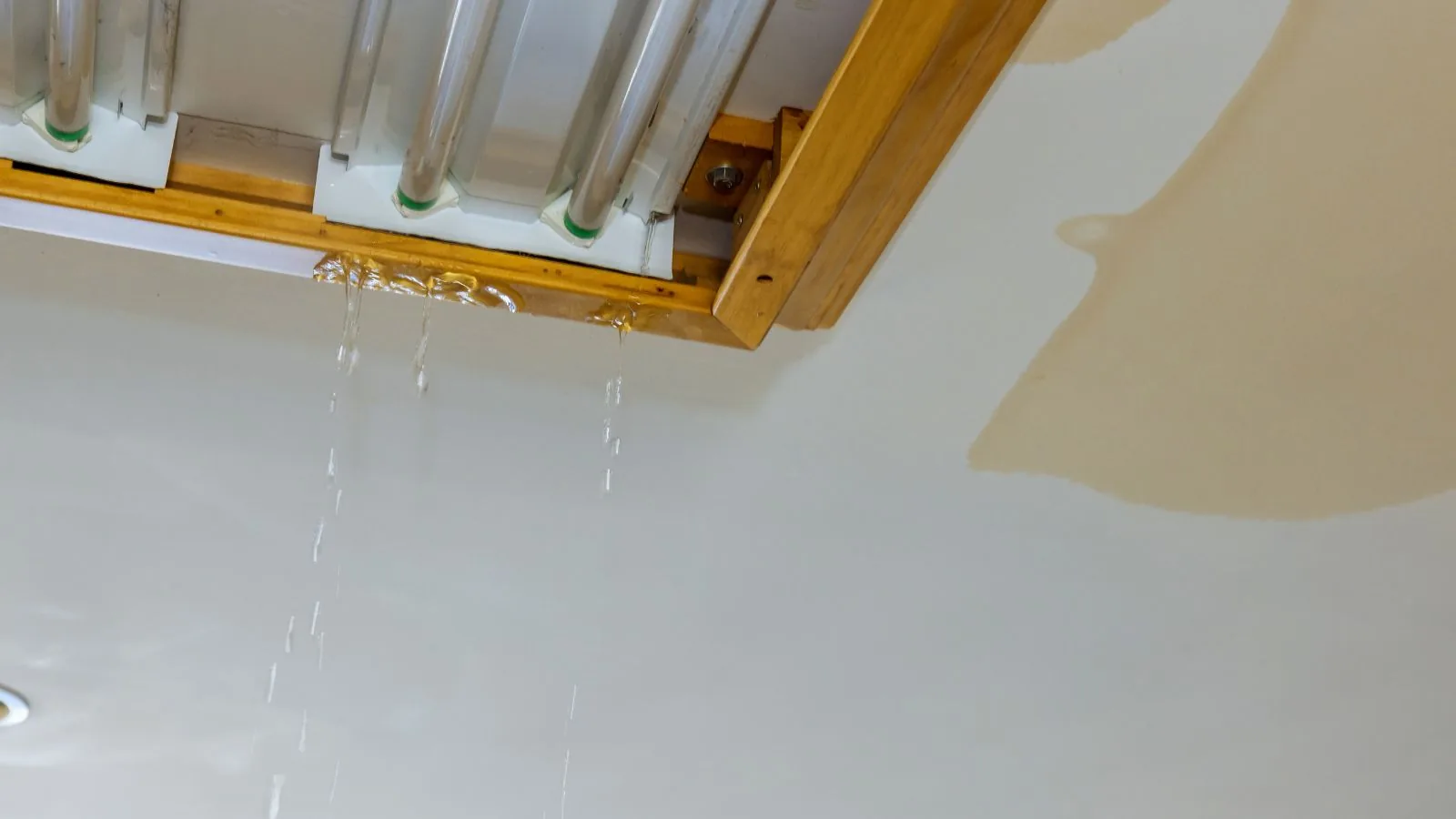
A dripping or sagging ceiling is an emergency because the water you see is only the part that found a way out. A bulge means a pocket of water is pulling the drywall or plaster down, and it can collapse without warning. The 24/7 line is answered at night and on weekends, and the first step is to keep people out from under it.
Older buildings in places like Weehawken Heights often show leaks as stains on the ceiling below the source.
When a ceiling is an emergency
Ceiling safety steps
- Move people, pets and furniture out from under any bulge or active drip.
- Place a bucket under drips and, if safe, poke a small hole in the lowest point of a bulge so the water drains in a controlled way.
- If a light fixture or fan is wet, leave it off and call the utility or 911 if you see sparks or smell burning.
- Photograph the ceiling and the room above if you can reach it.
- Shut off water to the room above if the source is a fixture or supply line.
Where ceiling water usually comes from
The source is rarely directly above the stain. Water travels along joists and pipes before it drips. Common sources are an upstairs bath or washing machine, a failing supply line, an air handler condensate line in the attic, and, for top floors, the roof itself.
A ceiling that started dripping a short while ago, or a soft spot with what looks like a hole forming, is the same urgent situation. The fix starts with finding the source, then removing wet material, then drying the cavity.
Roof leaks that end up in the ceiling
This page also covers roof leaks, because the damage you live with is the ceiling. Water gets through flashing, worn shingles, flat-roof seams or a clogged drain, soaks insulation and then shows up as a brown stain. Flat and low-slope roofs on multi-unit buildings and older houses are especially prone to seam and drain failures.
A roofer repairs the roof. Restoration crews extract water from the ceiling cavity, remove wet insulation and drywall, dry the framing and prepare the room for repair. If the leak is storm-driven, see storm water damage cleanup for the wider envelope picture.
Water still spreading while you read? The 24/7 line is open now.
Call (844) 950-6900How ceiling water damage is repaired
Find the path
Moisture meters and thermal imaging trace the water from the stain back to its source.
Open and remove
Wet drywall, plaster or insulation is cut out, and controlled openings let trapped water drain.
Dry the cavity
Air movers and dehumidifiers dry joists and the space above the ceiling until readings are normal.
Repair the finish
New drywall or plaster patching, texture and paint follow once the structure is dry.
Plaster, drywall and what to expect
| Ceiling type | Typical concern | Usual approach |
|---|---|---|
| Drywall | Sagging and brown staining | Cut out saturated sections, dry, replace. |
| Older plaster and lath | Heavy and brittle, can fall in pieces | Assess carefully, remove loose plaster, dry, patch or replace. |
| Popcorn or textured ceiling | Texture may need testing before disturbance | Ask about testing before any scraping or removal. |
| Ceiling with recessed lights | Water around fixtures | Treat as an electrical concern, call the utility if in doubt. |
Cost factors and insurance
| Factor | What it changes |
|---|---|
| Source and duration | Long leaks soak more insulation and framing. |
| Area affected | A single stain differs from a room or several units. |
| Ceiling material | Plaster, drywall and texture change labor and repair. |
| Access | Top floors and attics change how work is staged. |
Scope and price are explained before work starts. A sudden roof or plumbing failure is often a covered event, while gradual deterioration often is not, so check your policy and photograph the damage and the source before repairs.
The published reference behind ceiling work
Ceiling jobs follow the same published standard as other water losses, ANSI/IICRC S500. It asks the crew to find the source, identify what the water touched and document readings before and after drying. For ceilings, that means checking the insulation and framing above the stain, not only the visible patch.
Questions people ask
Do you handle ceiling leak emergencies at night or on weekends in Weehawken?
Yes. The line is open 24 hours a day, every day. Crews are sent the same day when available, and while you wait you should keep people clear of any bulge and catch drips with a bucket.
Should I puncture a bulging ceiling?
A small controlled hole at the lowest point can release trapped water and reduce the chance of a collapse. Stand to the side, wear eye protection, and call for help if the area is large or you are not comfortable.
Do you fix the roof as well?
A roofer repairs roof leaks. Restoration crews handle the water inside: extraction, removal of wet material, drying and prep for repair. Both are usually needed after a roof leak.
Is a stained ceiling a sign of mold?
A stain shows moisture passed through. Mold needs moisture to grow, and the way to find out is to have the area inspected after the source is fixed. See the mold remediation page for the process.
Ready to talk it through? Call the line any hour.
Call (844) 950-6900