
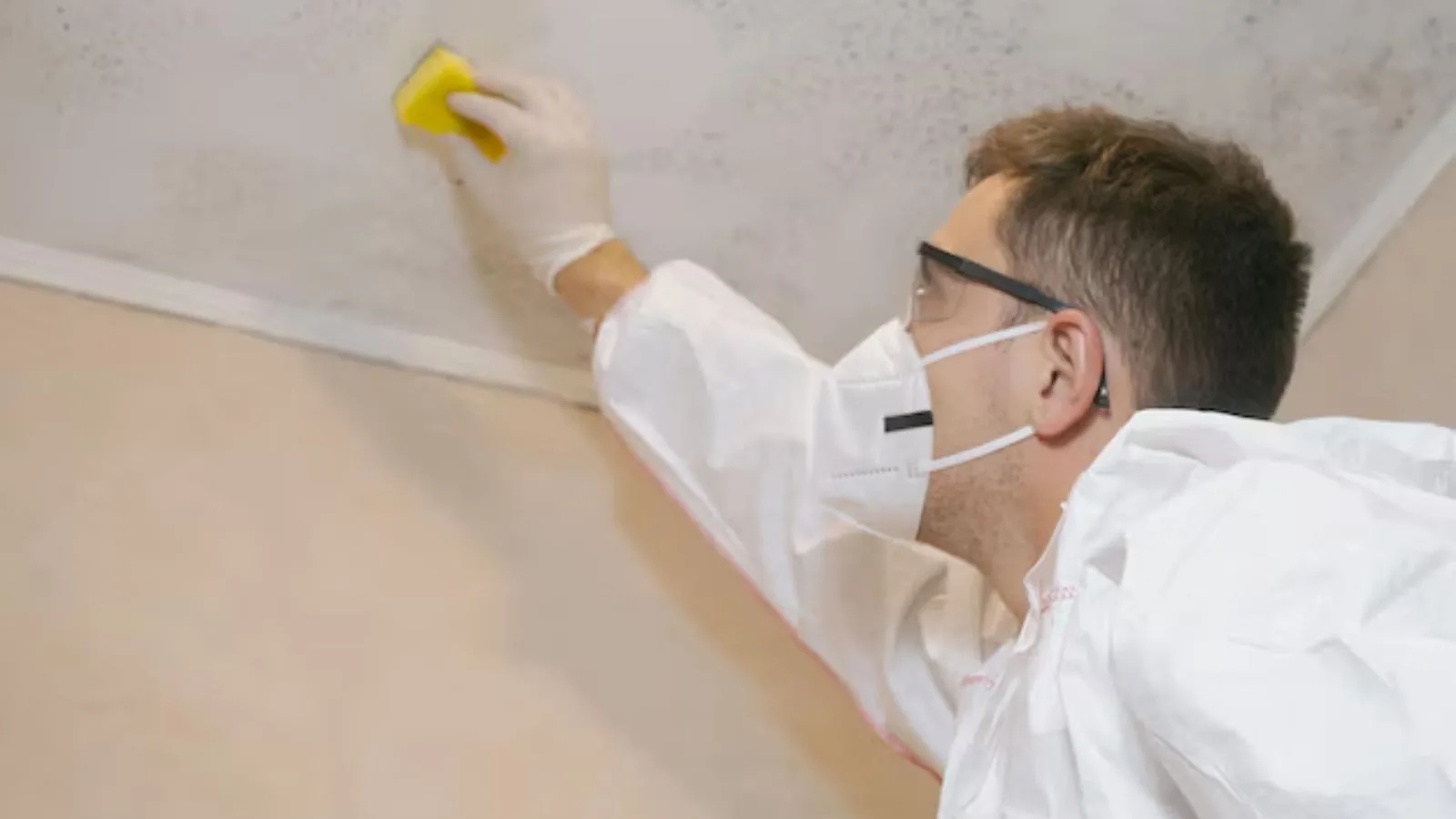
Mold is a moisture problem first and a cleaning problem second. The New Jersey Department of Health states that mold spores need water to grow and that most mold problems occur when there is excess water. The line is open around the clock, and the most useful first question is where the moisture came from.
Spotting mold in plain terms
People usually come to this page with a symptom. A musty smell in a closet, dark spots on a bathroom ceiling, a stain at the corner of a wall and ceiling in a shower, fuzzy growth behind furniture or under carpet, or a smell that will not go away after a leak. The trade name for what fixes it is mold remediation, and it starts with an inspection.
What to do first
- Stop the water. Fix the leak, condensation line or roof problem that feeds the area.
- Do not disturb the growth by scrubbing or sanding, which can spread spores.
- Turn off fans pointed at the area and keep the room closed if possible.
- Photograph the area and note when the leak started.
- Call the line for an inspection and talk through testing options.
What mold remediation involves
Remediation to ANSI/IICRC S520 practice means finding and correcting the moisture source, containing the area, removing contaminated porous materials, cleaning remaining surfaces and verifying the result. The S520 standard is a published guide, and you can ask any company whether its crews work to it and how it verifies the outcome.
Inspect and find the water
A visual inspection and moisture readings find the source and the extent of wet materials.
Contain
Plastic barriers and negative air control reduce the spread of dust and spores during work.
Remove and clean
Affected drywall, insulation or flooring is removed, and surfaces are cleaned with HEPA vacuums and damp wiping.
Dry and verify
The area is dried, and clearance can be confirmed by a visual check and, if you want, independent testing.
Testing, inspection and clearance
An independent assessor, separate from the company doing the removal, can inspect and test before and after work. Some buyers and lenders ask for a clearance document before a sale, and it is reasonable to ask the lender what it accepts. Testing results describe a sample on a day, and the interpretation is for the assessor.
The New Jersey Department of Health says there are no State certification programs for companies performing mold work and that the Department does not endorse or qualify the work of private companies. Ask any company about its insurance, its process and how it verifies results, and ask whether your state licenses mold work before you hire anyone.
| Question | Why to ask |
|---|---|
| What is feeding the moisture? | Without fixing it, mold returns. |
| Will you contain the work area? | Containment limits spread. |
| Do you follow S520? | A published standard gives a benchmark. |
| How will you verify results? | Visual checks, moisture readings and optional testing. |
| Who handles testing? | Independent testing avoids a conflict of interest. |
Water still spreading while you read? The 24/7 line is open now.
Call (844) 950-6900Mold, moisture and Weehawken homes
In Weehawken, common water sources include bathroom and kitchen leaks, AC condensate lines, roof and window leaks, and basement seepage. The North Hudson Sewerage Authority has described frequent street and basement flooding in the township during intense storms, which is a reason to dry any wet basement room promptly. See AC leak water damage repair for condensation problems.
Health questions about mold belong to a physician, and this page makes no health claims. Renters can contact the township building department about unrepaired leaks.
Cost factors and insurance
| Factor | What it changes |
|---|---|
| Area and materials | More surface and porous material raises scope. |
| Containment needs | Larger or occupied spaces need more setup. |
| Testing | Independent assessment is a separate item. |
| Moisture source repair | Plumbing or roof repair is separate. |
| Rebuild | Drywall and finishes follow clearance. |
Scope and price are explained before work starts. Many policies cover mold only when it results from a covered water event and may limit it, so ask your insurer what applies before work begins.
Questions people ask
Do I need to test before removal?
Not always. Visible growth with a known cause is often handled by removal, and testing is useful when the source is unclear or a buyer or lender asks.
Can I clean mold myself?
Small areas on hard surfaces may be cleaned with care. Larger areas, hidden growth and anything in a wall are better handled by a professional because of containment.
Does bleach solve it?
No. Bleach does not address the moisture, and porous materials need removal. Fix the water source and follow a process.
Can mold come back?
If moisture returns, yes. No process can promise otherwise. Fixing the source and keeping humidity controlled is what lowers the chance.
Ready to talk it through? Call the line any hour.
Call (844) 950-6900