
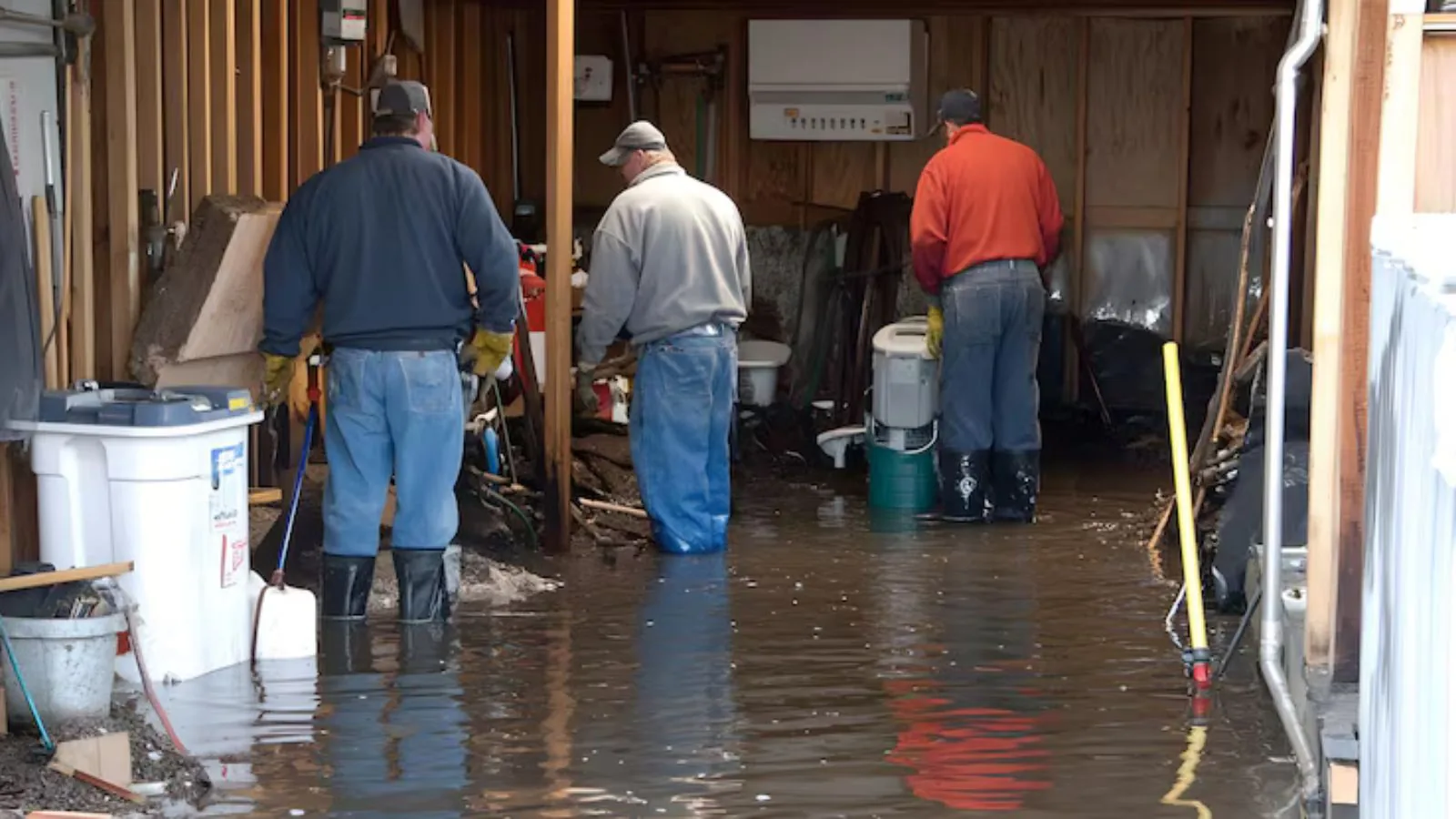
Standing water is an emergency from the first hour. It wicks into baseboards, soaks the subfloor and creeps toward the next room while you decide what to do. The 24/7 line is answered at night, on weekends and on holidays, and the most useful first move is to stop the source and keep the water away from outlets.
When standing water is an emergency
Water that is still running, moving across the floor or touching outlets, power strips and appliance cords is an emergency. So is any amount of water in an apartment or condo, because a small pool above a ceiling drops into the unit below. Clear water from a supply line is simpler to remove than water that came up through a floor drain or toilet, which changes the whole job.
While you wait for the crew
- Shut off the main water valve or the fixture valve if you can reach it safely.
- Turn off power to wet areas only if the panel is dry and you can reach it without stepping in water. Otherwise call the utility or 911 first.
- Lift small furniture, rugs and boxes onto foil, blocks or a dry counter.
- Photograph the water, the source and the damage before anything moves.
- Keep children and pets out of the wet area until the crew has looked at it.
How water extraction works
Extraction removes the bulk water before drying starts. Crews use submersible pumps for deep water, portable extraction units for carpet and pad, and weighted wands that pull water out of fibers and the cushion beneath them. The method depends on how deep the water is and what it is sitting on.
| Water situation | Usual method | What decides the next step |
|---|---|---|
| Shallow water on tile or vinyl | Wet vacuum and squeegee | Whether water slipped under baseboards or cabinets. |
| Water soaked into carpet and pad | Weighted extraction wand, pad lifted or removed | How long the pad stayed wet and what the water carried. |
| Several inches across a floor | Submersible pump, then wet vacuum | Depth, power safety and where the water can drain. |
| Water trapped in wall cavities | Small openings or removed baseboard to release it | Moisture readings behind the wall. |
| Water from a drain or toilet | Treated as contaminated, see sewage backup cleanup | Category of water and who is in the building. |
Extraction is the first step, not the last
Pulling out standing water leaves the materials around it wet. Drywall, framing and subfloors hold moisture long after the surface looks dry, which is why structural drying and dehumidification follows extraction on nearly every job. Crews use moisture meters and thermal imaging to find wet areas that cannot be seen, then set air movers and dehumidifiers to dry them.
Restoration work is commonly done to ANSI/IICRC S500, the published standard for water damage restoration. You can ask any company whether its crews work to it and how it documents moisture readings from the first visit to the last.
Water still spreading while you read? The 24/7 line is open now.
Call (844) 950-6900Extraction in Weehawken buildings
Weehawken mixes older houses on the Palisades ridge with apartment and townhouse buildings along the Hudson waterfront. In a multi-unit building the water often comes from somewhere else, such as a neighbor's supply line, so the first call may need to include your building manager or condo board. They control the riser shutoff that stops water you cannot reach.
Heavy rain adds another source. The North Hudson Sewerage Authority describes frequent flooding of streets and basements in Weehawken during intense storms, because the older system carries sewage and stormwater together. If water entered through a floor drain or a basement doorway during a storm, treat it as contaminated and read about flood damage cleanup before touching anything.
What changes the cost of extraction
| Factor | Why it matters |
|---|---|
| Water category | Clean supply water, gray water and sewage need different handling and protection. |
| Depth and area | More square footage and deeper water mean more equipment and time. |
| Materials soaked | Carpet pad, hardwood and insulation behave differently from tile. |
| Access and building type | Upper floors, elevators and shared walls add logistics in multi-unit buildings. |
| Drying and rebuild scope | Extraction is often followed by days of drying and, sometimes, repair. |
Scope and price are explained before work starts, and no exact figure is quoted without seeing the damage. Sudden and accidental water damage is often covered by a homeowners policy, while flood damage is usually excluded and needs separate flood coverage. Check your policy or ask your insurer, and photograph everything first.
Questions people ask
Do you handle water extraction emergencies at night or on weekends in Weehawken?
Yes. The dispatch line is open 24 hours a day, every day, including holidays. Crews are sent the same day when available, and while you wait the best steps are to stop the source, stay out of water near outlets and photograph the damage.
How long does water extraction take?
Removing standing water from one affected area is usually a matter of hours. Drying the walls, floor and framing that absorbed water takes several days, and the crew sets that expectation after taking moisture readings.
Can I use a regular shop vacuum on standing water?
Only a vacuum rated for wet pickup, and only if no outlets, cords or appliances are in the water. A dry household vacuum on wet floors is a shock risk and will not remove water from carpet pad or wall cavities.
Does insurance pay for water removal?
It depends on the cause. Sudden and accidental discharge, such as a supply line failure, is often covered, while rising flood water is usually excluded. Report the loss to your insurer right away and ask what your policy says.
Ready to talk it through? Call the line any hour.
Call (844) 950-6900