
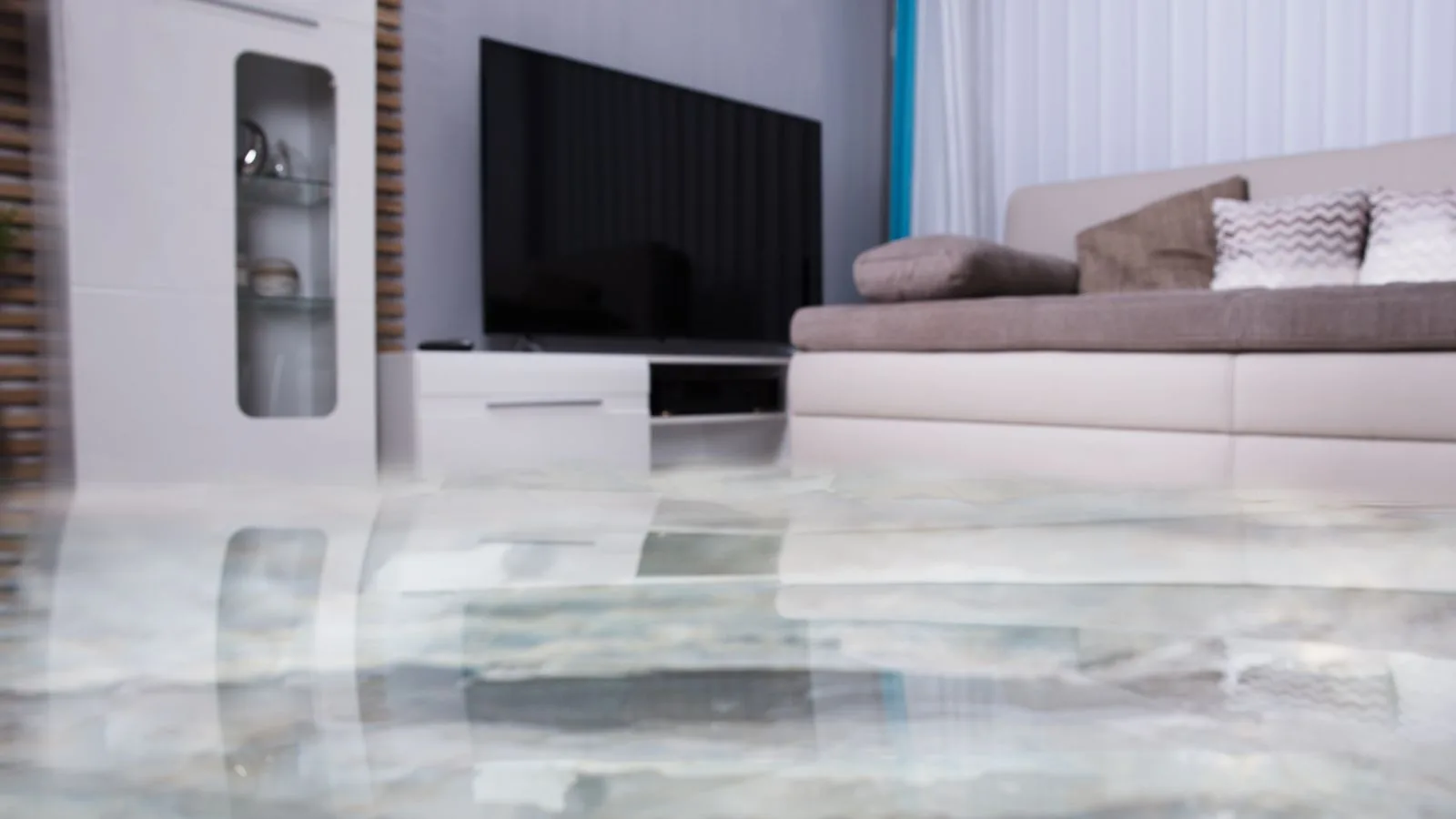
Storm water damage is an emergency because wind-driven rain keeps coming through openings until they are covered. Roof edges, window frames, siding seams and vents all let water in during intense weather. The 24/7 line is open at night and on weekends, and safety comes first when conditions are still rough.
When storm water is an emergency: staying safe
Safety steps
- Stay away from downed wires and call the utility or 911.
- Do not enter rooms with sagging ceilings or standing water near outlets.
- Cover openings with tarps or plastic if you can do so without climbing onto a wet roof.
- Photograph the damage inside and out for your insurer before cleanup.
- Call the line and describe where water came through.
What storm damage looks like inside
Typical signs are ceiling stains below roof edges, wet window sills and wall base, bubbled paint, soaked attic insulation and puddles near doors. Water may enter far from where you see it, because it runs along framing before dripping. Moisture mapping finds the extent.
This page covers wind, rain and storm-event damage through the building envelope. If water rose from outside the building, see flood damage cleanup, and for a plain roof leak the ceiling water damage repair page applies.
| Entry point | What you may see | Typical response |
|---|---|---|
| Roof edge or flashing | Stain at the ceiling-wall corner | Roofer repairs, crew dries cavity. |
| Window or door frame | Wet sill and wall base | Extract, dry, check framing. |
| Siding or vents | Wet wall, damp insulation | Open wall if needed, dry. |
| Chimney or skylight | Ceiling stain nearby | Seal source, dry and repair. |
How a storm cleanup runs
Protect from more water
Temporary covers keep further rain out while permanent repairs are arranged.
Extract and assess
Standing water is removed and moisture is mapped through walls and ceilings.
Dry
Air movers and dehumidifiers dry the structure.
Document and repair
Photos and logs support your claim before repairs begin.
Water still spreading while you read? The 24/7 line is open now.
Call (844) 950-6900Storms and Weehawken's waterfront
Weehawken sits on the Palisades above the Hudson River, so wind exposure on the ridge and surge exposure at the waterfront are different problems. A New Jersey DEP study of the Hudson waterfront describes Hurricane Sandy floodwater in Weehawken Cove and Hoboken, and the same study area includes Jersey City and Bayonne.
The North Hudson Sewerage Authority has described frequent street and basement flooding in Weehawken during intense storms, so heavy rain may combine roof or window leaks with basement water. Treat basement water as possibly contaminated until it has been assessed, and ask about the sewage backup cleanup process if drains backed up.
Insurance and storms
The New Jersey Department of Banking and Insurance advises reporting the loss immediately, photographing damage and making reasonable efforts to protect the property from further harm. Wind damage and wind-driven rain are treated differently from flood, which is typically excluded from standard homeowners policies. Ask your insurer which applies.
A short checklist for the claim conversation
Storm claims move faster with good records. Photograph the damage inside and outside before temporary repairs, keep receipts for tarps, board-up and lodging, and write down when the storm started and when you first noticed water. Ask your insurer about its deductible for wind or named storms, because some policies treat them differently from other losses.
Save damaged materials until the adjuster has seen them, unless they pose a safety problem. If something must be thrown away, photograph it first. The New Jersey Department of Banking and Insurance publishes claim guidance after storms that is worth reading before you sign any scope.
Cost factors
| Factor | What it changes |
|---|---|
| Entry points | More openings mean more areas to check. |
| Materials wet | Insulation, drywall and flooring differ. |
| Temporary protection | Tarping and board-up are separate scope items. |
| Drying days | Equipment time follows readings. |
Scope and price are explained before work starts.
Questions people ask
Do you handle storm damage emergencies at night or on weekends in Weehawken?
Yes. The line is open 24 hours a day. Crews are sent the same day when available once conditions are safe, and you can ask for guidance on temporary covers while you wait.
Should I wait for the insurance adjuster before cleaning up?
Take photos first, then protect the property from further damage. The state insurance department says to make reasonable efforts to prevent more loss.
Is rain through a window covered?
Often, if a storm event caused it. Policy details matter, so ask your insurer.
Can you tarp a roof?
Roofing and temporary roof protection are best done by a roofer. Restoration crews handle interior water and drying.
Ready to talk it through? Call the line any hour.
Call (844) 950-6900