
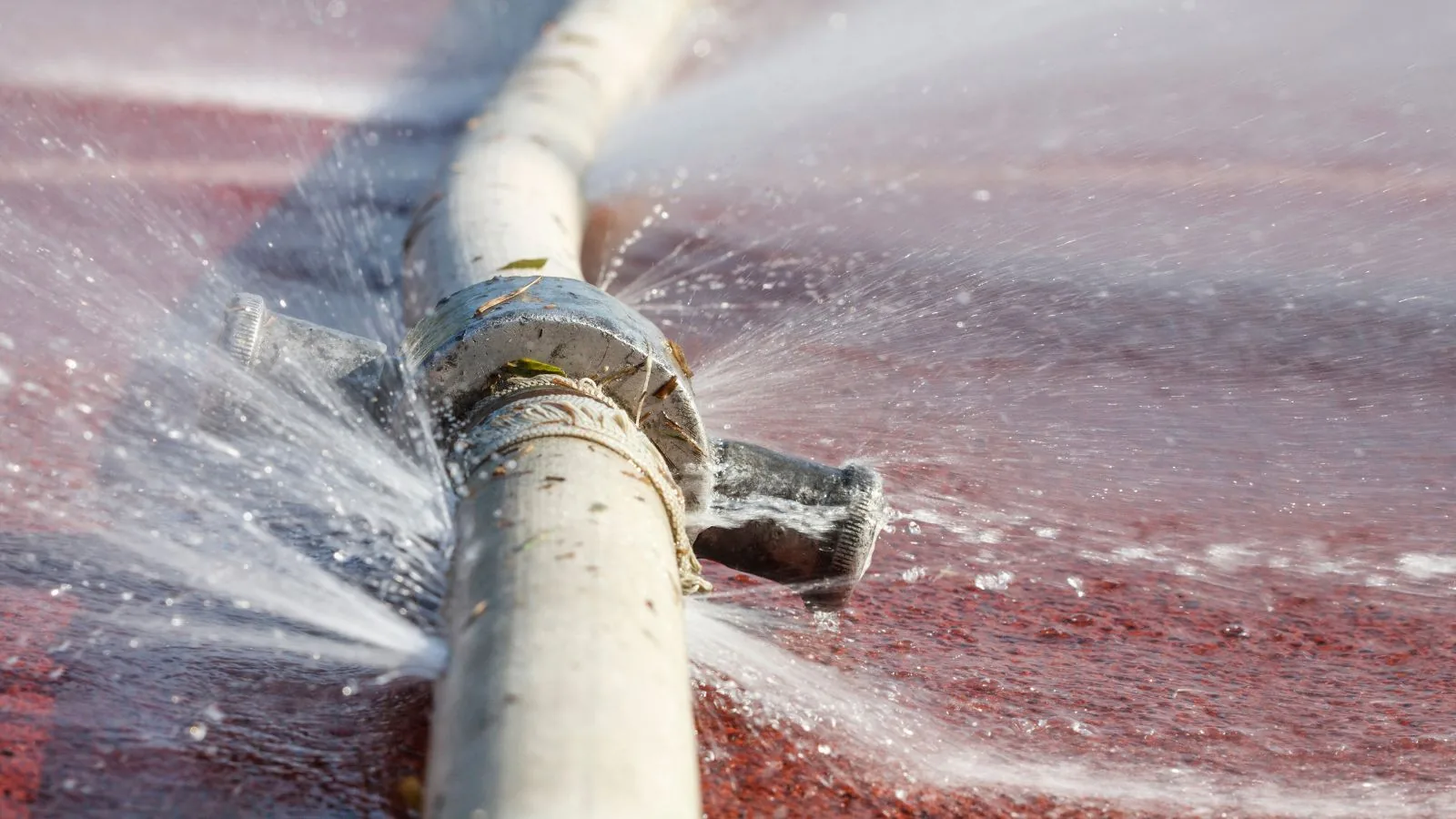
A burst pipe is an emergency the moment it lets go. Pressurized supply water keeps flowing until the valve is closed, and it travels through floor cavities and wall bays far from the break. Our 24/7 line is open at night and on weekends, and the first thing to do is close the main shutoff.
What to do in the first ten minutes
Burst pipe first steps
- Close the main water shutoff, usually near where the supply enters the building, or the valve under the nearest fixture.
- Open a cold faucet at the lowest point so the lines can drain.
- Do not touch outlets, panels or wet cords. If water is near the electrical panel, leave it alone and call the utility or 911.
- In an apartment, tell the building manager at once, because the riser valve controls water you cannot reach.
- Photograph the pipe, the wet areas and anything damaged before cleanup starts.
Once the water is off, call the line and describe what you see. Crews are dispatched the same day when available, including after hours, and the call is the best time to mention how long the pipe ran and which floors are wet.
Why burst pipes cause so much damage
Supply lines run at household pressure, so a split pipe sprays or pours rather than seeps. Water follows framing, wiring holes and pipe chases downward and sideways. A split in an upstairs bathroom wall can wet the kitchen ceiling below, and a break behind a cabinet can run a long way before anyone sees it.
Common sources include corroded fittings, a failed pressure-reducing valve, a loose compression connection and a supply line under a sink that finally gave out. A burst pipe under a sink with water spreading across the kitchen floor is one of the most frequent scenarios, and the answer is the same every time: stop the water first and then remove it.
How crews handle a burst pipe job
Stop and secure
The source is closed off and the area is made safe, including power to wet circuits where it can be cut safely.
Find where the water went
Moisture meters and thermal imaging trace water through walls, floors and ceilings, including areas that look dry.
Remove and open up
Standing water is extracted, wet insulation and swollen drywall are removed, and wall cavities are opened to dry.
Dry and document
Air movers and dehumidifiers run until readings reach dry standards, and each visit is documented for your insurer.
The plumbing repair itself belongs to a licensed plumber. Restoration crews remove the water and dry the structure, and the two trades often work the same day so the line can be fixed while drying starts.
Water still spreading while you read? The 24/7 line is open now.
Call (844) 950-6900Burst pipes and Weehawken homes
Older houses, including those on the Palisades ridge, often have original or patched supply piping behind plaster, while apartment and condo buildings have more shared walls and risers. Both can hide a slow weep for weeks before it becomes a burst, and a wet spot on a wall is worth a call before it turns into a failure.
Cold snaps matter too. A pipe that froze in an exterior wall can split when it thaws, and the break may not show until the heat comes back on. If that is your situation, the frozen pipe water damage page covers what to check first.
What affects burst pipe cleanup costs
| Factor | What it changes |
|---|---|
| Run time before shutoff | More hours of flow means more wet materials and more drying. |
| Floors and rooms affected | Water that traveled between levels increases scope. |
| Materials involved | Plaster, drywall, insulation and flooring each dry or fail differently. |
| Drying days | Equipment time depends on moisture readings, not the calendar. |
| Rebuild scope | Drywall, paint and flooring replacement come after drying. |
Scope and price are explained before work starts. Water from a burst supply line is typically a sudden and accidental event, which a homeowners policy often covers, but your policy language decides. The New Jersey Department of Banking and Insurance advises reporting a loss immediately, photographing damage and keeping receipts.
Questions people ask
Do you handle burst pipe emergencies at night or on weekends in Weehawken?
Yes. The line is staffed 24 hours a day. After you close the main valve, call and describe the break, and crews are sent the same day when available, including overnight and on weekends.
Who fixes the pipe, you or a plumber?
A licensed plumber repairs the pipe. Restoration crews remove water, open wet areas and dry the structure. The two jobs usually overlap, and drying can start while the plumber works.
Is burst pipe damage covered by insurance?
Sudden and accidental discharge is often covered, while damage from long neglected leaks often is not. Policies differ, so report the loss right away, keep photos and receipts, and ask your insurer.
What if the pipe burst in the unit above mine?
Call your building manager and your own insurer, then call us. Water in your unit still needs extraction and drying, and documenting it early helps sort out whose coverage applies.
Ready to talk it through? Call the line any hour.
Call (844) 950-6900