
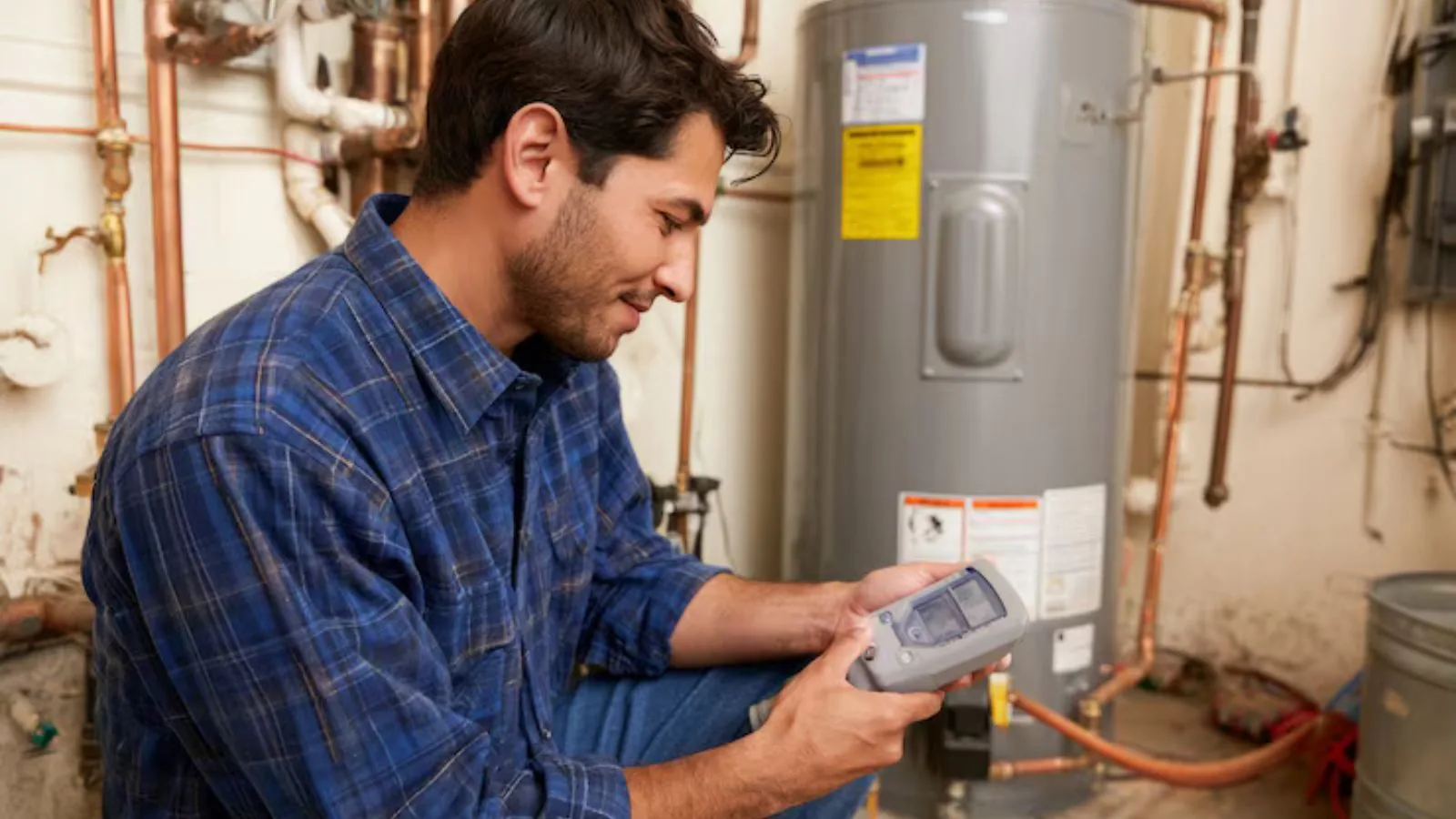
A leaking water heater is an emergency because the tank holds dozens of gallons and the supply line keeps refilling it. Heaters sit in basements, closets and utility rooms, so a slow drip can run for days before anyone sees it. The 24/7 line is open at night, and the first move is to close the cold water inlet valve.
Water heater leak: first steps
Before you call
- Close the cold water inlet valve on top of the heater, or the main shutoff if you cannot find it.
- Turn off power to an electric heater at the breaker, but only if the panel is dry. For gas, turn the control to off and call the gas utility if you smell gas.
- Do not touch a heater sitting in standing water with the power still on.
- Open a hot tap upstairs to relieve pressure and speed drainage if the tank is emptying.
- Photograph the tank, the label and the wet area.
Why water heaters fail
Tanks corrode from the inside as the sacrificial anode wears out, and sediment can overheat the bottom of the steel. The result is often a seam leak, a failed drain valve or a split at a fitting. Pressure relief discharge and failed supply connectors can also soak the floor around a heater that is otherwise fine.
Tankless units leak less water but can still fail at connections or from condensate. Whatever the type, the heater itself is a plumber's job, and the water it released is a restoration job.
What cleanup involves
Extract the water
Standing water is removed from the floor, and carpet or pad is lifted if it absorbed water.
Check what the water reached
Moisture meters and thermal imaging check walls, framing, stored items and nearby finished spaces.
Dry and sanitize as needed
Air movers and dehumidifiers dry the area. Clean supply water is simpler than contaminated water, but long exposure can change that.
Coordinate with the plumber
A licensed plumber or heating professional replaces the unit, and restoration continues in parallel.
In a basement utility room, the water may also flow toward a floor drain or sump. If the room has a finished ceiling or wall nearby, ask for moisture readings behind them, because water wicks into materials that look dry.
Water still spreading while you read? The 24/7 line is open now.
Call (844) 950-6900Water heaters in Weehawken buildings
In apartment and condo buildings, water heaters often sit in closets inside the unit or in a shared mechanical room. A leak in a closet can soak the neighboring wall and the unit below. Tell your building manager or condo board immediately, because they may control the shutoff and the insurance conversation for common elements.
In older houses, the heater is often in the basement near the sewer connection. After heavy rain the same room can see water from outside, so it helps to know whether water came from the tank or from the drain, because the answer changes how the cleanup is classified. See appliance leak water damage if the source was a different appliance.
Tank leak or something else?
| What you see | Likely source | Next step |
|---|---|---|
| Water pooling around the base | Tank seam, drain valve or fittings | Shut off supply and power, call the line. |
| Drips from the top pipes | Inlet or outlet connections | Close the cold inlet, a plumber can often repair the fitting. |
| Wet floor with a hot smell | Relief valve discharge | Have the system pressure checked before use. |
| Water in a utility room after rain | Outside water, not the heater | See flood damage cleanup. |
Cost factors and insurance
| Factor | What it changes |
|---|---|
| Run time | Hours versus days of leaking changes how far water traveled. |
| Flooring | Concrete dries differently from carpet or finished wood. |
| Finished spaces nearby | Drywall and cabinets raise the scope. |
| Drying days | Equipment time follows moisture readings. |
Scope and price are explained before work starts. A sudden tank failure is often covered, though many policies exclude the heater itself and cover only the water damage, and wear and neglect are commonly excluded. Read your policy or ask your insurer.
The published reference behind heater leak cleanup
Heater leaks are usually clean water, and ANSI/IICRC S500, the published standard for professional water damage restoration, treats clean water as the easiest category to reverse when it is removed quickly. A slow leak that has run for weeks is different, because materials may have stayed wet long enough to need removal.
Questions people ask
Do you handle water heater leak emergencies at night or on weekends in Weehawken?
Yes. The line is open 24 hours a day. After you shut off the cold inlet and the power, call, and crews are sent the same day when available, including overnight and on weekends.
Should I drain the whole tank?
If it is failing and you can do it safely, draining stops the leak from refilling. Turn off power or gas first and use a hose to a floor drain. If the tank is hot or the area is wet and electrical, wait for help.
Do you replace the heater?
A licensed plumber or heating professional replaces water heaters. Restoration crews remove water and dry the structure so the two jobs fit together.
Will the leak cause mold?
Mold needs moisture, and a long running leak in a closed room gives it that. Drying the area promptly is the main step, and an inspection is reasonable if the area stayed wet for days.
Ready to talk it through? Call the line any hour.
Call (844) 950-6900