
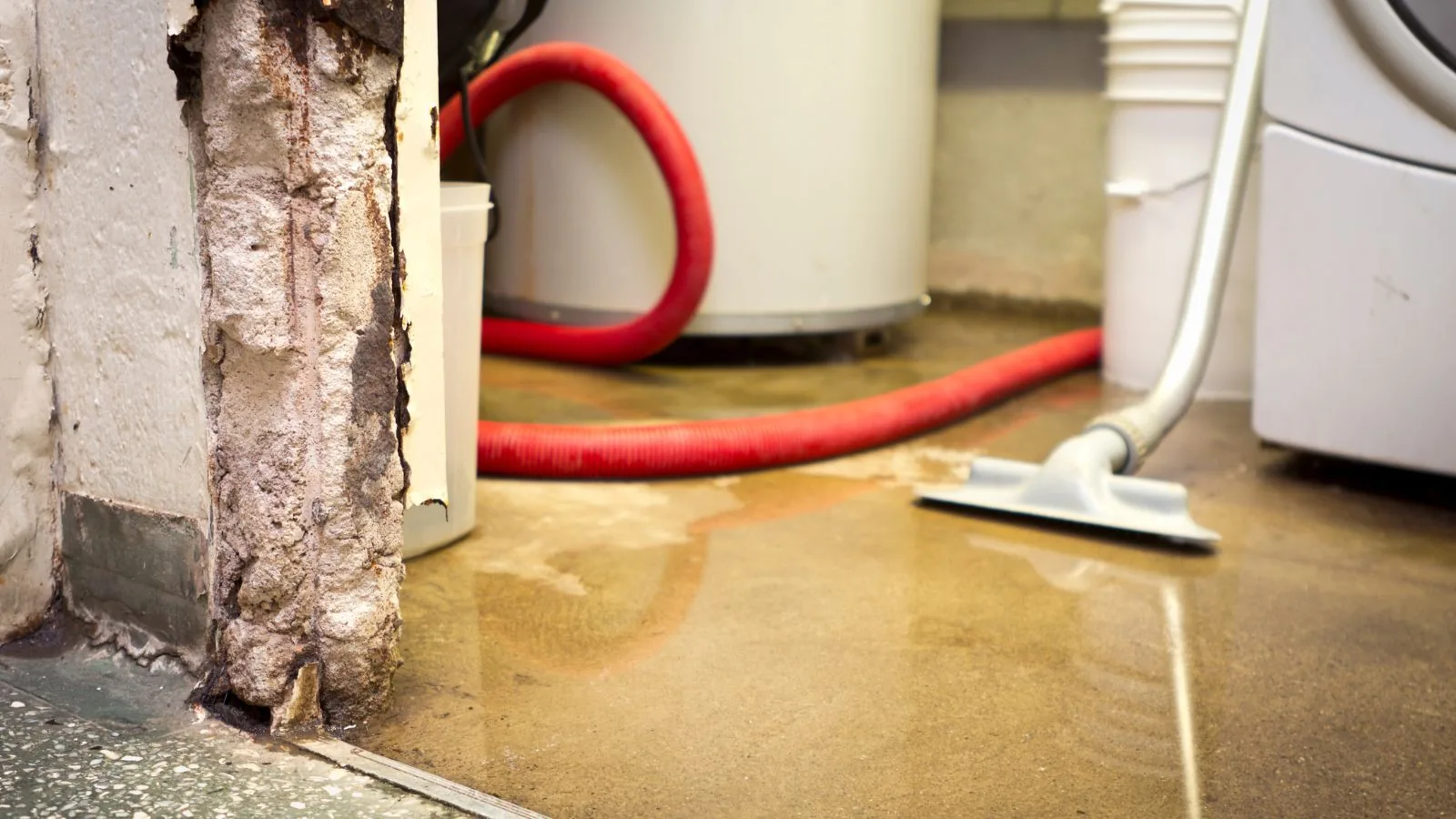
A slab leak is a water line leaking in or under a concrete floor. It is urgent when water is surfacing, when flooring is lifting or when your water meter spins with every fixture off. The 24/7 line is open at night and on weekends, and shutting the main valve is the first move.
Signs of water under the slab
Many people ask first about a symptom they cannot explain. A warm patch on a floor, a hissing or running sound with everything off, cracked tile, damp carpet near a wall, a musty smell and a water bill that jumps without a reason can all point to a leak beneath the surface.
What to check
- Turn off every fixture and appliance, then watch the water meter for movement.
- Feel the floor for warm spots, which can indicate a hot water line leak.
- Look for lifting flooring, new cracks or damp baseboards along one wall.
- Listen near walls and floors for running water.
- If the meter moves and you cannot find a source, close the main and call a plumber and the restoration line.
What a slab leak really means for restoration
The term slab leak belongs to plumbers, but what you live with is wet flooring, wet baseboards and wet walls. Restoration work is the same wherever the leak starts: find where the water went, extract what can be extracted, open what cannot dry in place and dry the structure. The plumber's job is to locate and repair the line, which may involve concrete work.
Honesty about limits matters here. Restoration crews do not locate pipes under concrete, and drying alone will not fix a leak that keeps running. The best outcome is a plumber leak detection visit and a restoration visit working the same day.
How crews handle water from a slab leak
Map the moisture
Meters and thermal imaging show which flooring, walls and cabinets absorbed water.
Remove wet flooring if needed
Carpet, pad and some laminate come out. Wood and tile are evaluated.
Dry the concrete and framing
Concrete holds water, so drying can take longer. Air movers and dehumidifiers run until readings are normal.
Repair after the plumber
Flooring and baseboards are replaced once the line is fixed and the structure is dry.
Water still spreading while you read? The 24/7 line is open now.
Call (844) 950-6900How common are slab leaks in Weehawken?
This page does not claim a local rate. Whether a building has water lines in or under a concrete floor depends on its age and design. The township building department is the right source for construction details at your address.
The mechanism applies in any building with supply lines in or under concrete. Ask your building manager or an inspector whether your unit has lines under the floor and how old they are.
| Leak sign | What it suggests | Next step |
|---|---|---|
| Warm floor patch | Hot water line leaking | Close the water heater supply and call a plumber. |
| Meter moves with fixtures off | Leak somewhere in the system | Close the main and call a plumber. |
| Wet carpet near a wall | Wall or floor leak | Call the line for moisture mapping. |
| Hissing sound | Pressurized leak | Close the main immediately. |
Cost factors and insurance
| Factor | What it changes |
|---|---|
| Time before shutoff | Longer runs saturate more materials. |
| Flooring and finishes | Hard surfaces differ from carpet and wood. |
| Concrete drying | Slab moisture can add drying days. |
| Repair access | Plumbing repair may require breaking concrete. |
Scope and price are explained before work starts. Insurance treatment of leaks under a slab varies, and some policies limit coverage for the plumbing repair while covering resulting water damage. Read your policy and ask your insurer.
What to do before the crew arrives
Safety steps for a suspected slab leak
- Close the main water valve if you hear running water with every fixture off.
- Keep people off any floor that is hot or wet near outlets.
- Do not drill or cut the slab yourself.
- Call a licensed plumber to locate the leak.
- Photograph damp spots, stains and any cracked flooring.
- Call the line so drying can start once the source is controlled.
Our crews dry the structure after the plumber finds and repairs the line. The published standard for the drying side is ANSI/IICRC S500, which treats readings, not appearance, as the proof that a floor system is dry.
Questions people ask
Do you handle slab leak emergencies at night or on weekends in Weehawken?
Yes. The line is open 24 hours a day. If water is surfacing or the meter is running, close the main valve, call, and crews are sent the same day when available.
Can you find the leak?
A plumber with leak detection equipment finds the line. Restoration crews find where the water traveled and dry it.
Is concrete damaged by a slab leak?
Concrete itself usually is not, but it holds moisture and can slow drying. Cracks that appear should be mentioned to a plumber or structural professional.
How do I know the leak is not from the roof or a wall?
Turn off all fixtures and check the meter. Movement points to a pressurized line, while stains that follow rain point elsewhere.
Ready to talk it through? Call the line any hour.
Call (844) 950-6900