
Structural drying is the process of removing the moisture that stays in a building after standing water is gone. A floor can feel dry while the subfloor, wall base and framing hold water, and that hidden moisture is what causes swelling, odor and mold. The 24/7 line is open when you need drying to start.
The symptom behind the service
Most people look for this service with a symptom in mind. Baseboards feel cold or damp, paint is bubbling, floors buckle, the room smells musty, or a wall still feels wet days after a leak. The trade name for the fix is structural drying, and it begins with finding where the water went.
Moisture mapping: finding what you cannot see
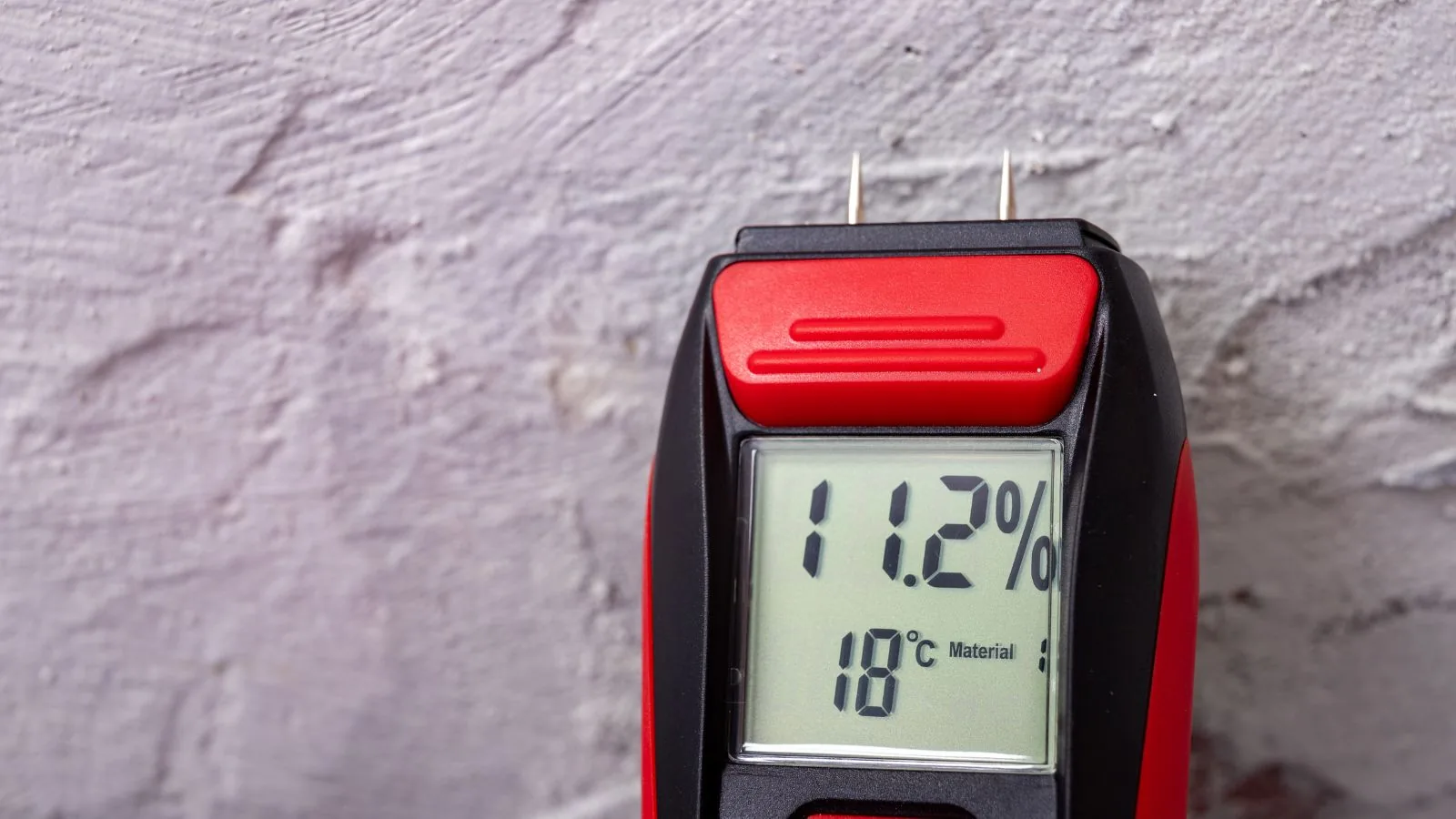
A moisture meter reads water content in drywall, wood and concrete. A thermal camera shows temperature patterns that can indicate wet areas behind finishes. Together they produce a map, with readings taken on each visit so you can see drying progress rather than guess.
| Tool | What it does | Limit |
|---|---|---|
| Moisture meter | Reads moisture content in materials | Needs contact and a reference for dry. |
| Thermal imaging camera | Shows cooler wet areas behind surfaces | Shows patterns, not exact moisture. |
| Hygrometer | Measures humidity and temperature in the air | Describes the air, not the material. |
| Air movers | Move air across wet surfaces to speed evaporation | Work only with humidity control. |
| LGR dehumidifiers | Pull moisture from the air so surfaces keep releasing water | Need a closed room to work well. |
Water mitigation: how drying works
Water mitigation means stopping further damage while the structure dries. Evaporation moves moisture from materials into the air, and dehumidifiers remove it so the cycle continues. Without dehumidification, air movers can raise room humidity and slow the job.
Set up a drying plan
Equipment is placed based on the readings, the size of the room and what the materials are.
Run and monitor
Air movers and dehumidifiers run continuously. Crews return to check readings and adjust equipment.
Open if needed
If a wall cavity or floor is not drying, small openings let air in, or materials are removed.
Confirm dry
Readings are compared against dry reference values before equipment is removed.
Water still spreading while you read? The 24/7 line is open now.
Call (844) 950-6900How long does drying take?
Drying time depends on the material, how long it was wet and the conditions inside the building. Drywall can dry in a few days, while hardwood and concrete can take longer. A crew cannot honestly promise a number before measuring, and a good plan sets a target date after the first readings.
People sometimes ask about renting air movers and dehumidifiers. Equipment without moisture mapping risks drying the surface while the cavity stays wet, so ask for the readings that show the job is done, not just the machines.
Drying and local conditions
Season and ventilation change how drying goes. Humid summer air slows evaporation unless dehumidifiers pull moisture out, while winter heating dries the air but cold exterior walls can hold moisture longer. A crew should explain how it is managing humidity in your space.
Multi-unit buildings add a layer. Drying equipment is noisy and uses power, and a shared wall or floor may need to be dried from both sides. Tell your building manager before equipment arrives so neighbors know what to expect. For water that is still standing, start with water extraction, and for drywall-specific repair see wall and drywall water damage repair.
Cost factors and insurance
| Factor | What it changes |
|---|---|
| Square footage and rooms | Larger areas need more equipment. |
| Material type | Concrete and hardwood dry more slowly than drywall. |
| Drying days | Equipment time follows readings, not a fixed schedule. |
| Humidity conditions | Season and building ventilation affect speed. |
Scope and price are explained before work starts. Insurers commonly ask for moisture logs, so documented readings help your claim. The ANSI/IICRC S500 standard describes drying goals, and you can ask any company how it documents progress.
What to do before the crew arrives
Safety steps while you wait
- Keep people and pets out of wet rooms.
- Stay off wet floors near outlets and appliances.
- Open interior doors so air can circulate if the weather allows.
- Do not turn on heating or cooling to force the room dry.
- Leave wet materials in place so the crew can read them.
- Photograph the damage and note the time the water started.
Questions people ask
How do I know my walls are actually dry?
Meter readings in each wall and floor compared with dry reference values. Touch alone is not reliable because moisture can sit inside a wall.
Do I need to leave my home during drying?
Usually not. Equipment is loud and uses power, so some people choose to stay elsewhere, but it is not required.
Can drying prevent mold?
Drying fast removes the moisture mold needs. No step offers certainty, but it is the most important step.
Do you offer drying outside of emergencies?
Yes. If a leak was found days after it happened, the line can arrange moisture mapping and drying.
Ready to talk it through? Call the line any hour.
Call (844) 950-6900