
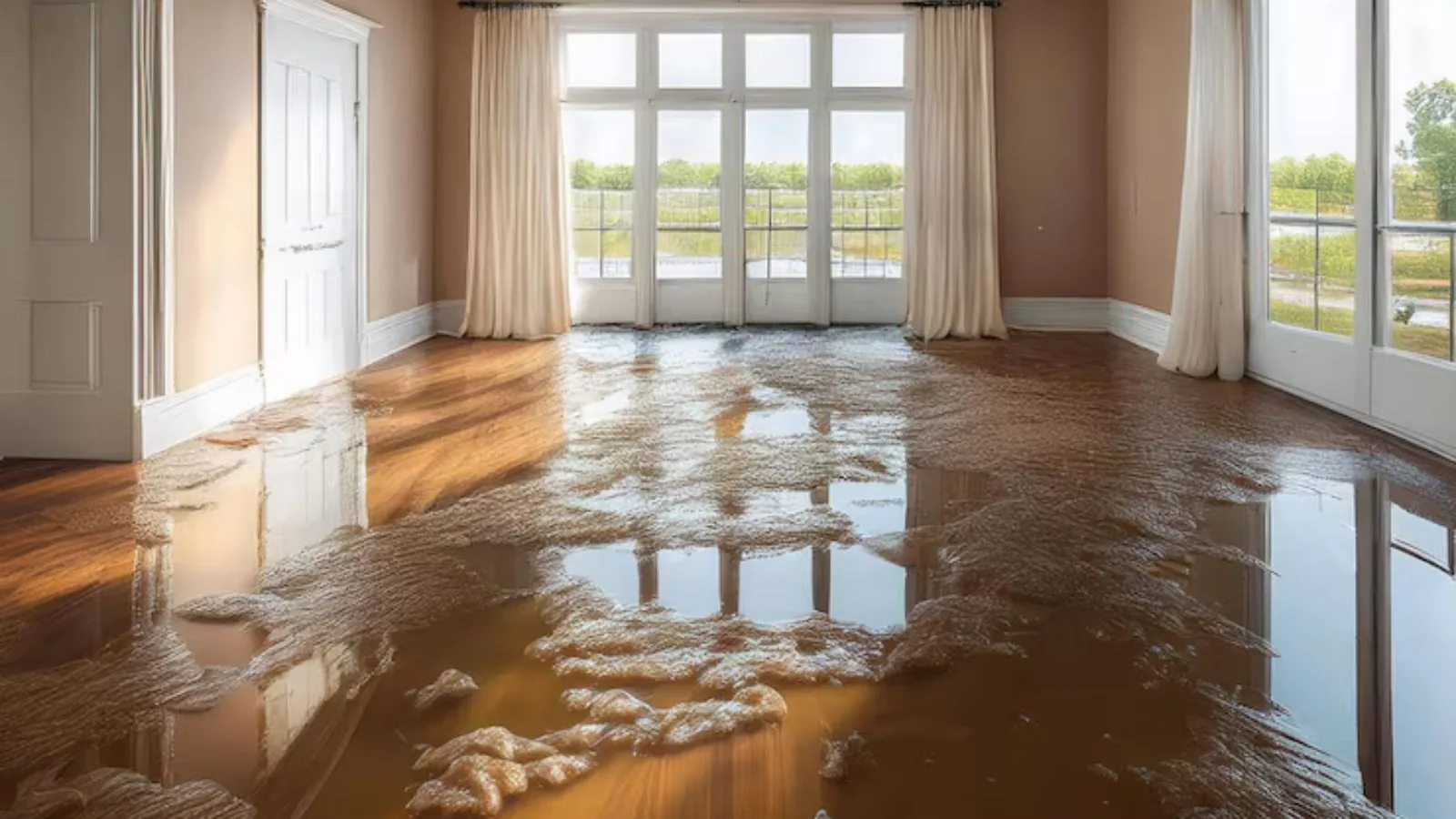
Drywall is gypsum between paper, and paper wicks water upward like a candle wick. A wall that took on water at the base can show damage a foot or two above the floor. The 24/7 line is available if water is still coming through, and calling before you cut helps keep repairs small.
Signs your walls took on water
| Sign | What it suggests | Next step |
|---|---|---|
| Bubbling or peeling paint | Moisture behind the paint | Moisture reading before any paint. |
| Soft or crumbly drywall | Gypsum has absorbed water | Likely removal of that section. |
| Stained baseboards or swelling | Water at the base of the wall | Check behind the baseboard. |
| Musty smell with no visible wet spot | Moisture inside the wall cavity | Moisture mapping with meter and thermal camera. |
| Water on a nearby floor | Source close by | Find and stop the source. |
Sheetrock, plaster and baseboards behave differently. Drywall that stayed wet for more than a day or two is often cut out, while drywall that was only damp may dry in place. Plaster over lath, common in older houses, is heavier and drier more slowly, and it needs careful assessment.
What to do right away
Steps while you wait
- Stop the source and soak up standing water at the base of the wall.
- Pull furniture away from the wall and leave baseboards in place until readings are taken.
- Do not paint, caulk or seal a wall that is wet. That traps moisture.
- Photograph the damage, including a ruler next to stains for scale.
- Call the line for moisture mapping.
Controlled removal and repair
Map the wet area
Meters and thermal imaging show how far water traveled up and across.
Cut where needed
Wet drywall is cut at least a short distance above the wet line. Insulation behind it is removed if saturated.
Dry the cavity
Air movers and dehumidifiers dry studs and plates until readings match dry reference values.
Repair
New drywall, taping, texture and paint finish the job after the structure is dry.
Ceilings and walls often go together. If water came through from above, the ceiling water damage repair page covers the overhead side. Wall cavities that stayed wet for days can lead to mold, which the mold remediation page explains.
Water still spreading while you read? The 24/7 line is open now.
Call (844) 950-6900Walls in Weehawken's older and newer buildings
Older houses often have plaster walls over wood lath, including many on the ridge in The Heights and Uptown. Water can travel behind plaster and show up far from the source. Plaster that is dry to the touch may still hold moisture in the lath, so readings matter.
Newer apartment and townhouse buildings are more likely to use drywall over metal or wood studs. Those walls dry faster but share cavities with neighboring units, so coordinate with your building manager. Permit rules for repair work vary, so ask the township building department before you open a wall or replace large sections.
Baseboards, outlets and wall plates
Baseboards are usually removed first because they hide the wet line and trap water against the wall. Outlets and switch plates on a wet wall need care. If water reached a box, turn off the circuit, do not use the outlet and have it checked by an electrician after the wall is dry.
Insulation inside exterior walls can hold water for a long time. Fiberglass that is soaked usually comes out, and some foam products can be left in place if readings are good. The crew will tell you which type you have after opening a small test hole.
Cost factors and insurance
| Factor | What it changes |
|---|---|
| Wall height wet | Taller wet lines mean larger cuts. |
| Insulation | Saturated insulation usually comes out. |
| Plaster versus drywall | Plaster repair is a different skill and cost. |
| Trim and paint | Baseboards, texture and paint are separate scope. |
| Drying days | Equipment time follows readings. |
Scope and price are explained before work starts. Sudden damage is often covered, while long hidden leaks often are not. Photograph the wall before anything is opened.
The published reference behind wall drying
Wall cavities dry slowly because air does not move through them. ANSI/IICRC S500, the published standard for professional water damage restoration, expects readings inside and behind wall surfaces, which is why a small test opening is often the first step. That check shows whether insulation and framing are wet before anyone decides what to cut.
Questions people ask
Can wet drywall dry in place?
Sometimes, when it was only damp and the water was clean. Moisture readings in the drywall and the studs behind it decide.
How high do you cut?
Usually a short distance above the wet line shown by the meter, so no wet material is left behind.
Can I paint over a water stain?
Not until the wall is dry. Paint over moisture traps it, and the stain usually returns.
Do you handle wall water damage after hours?
The line is open 24 hours a day. For active water, stop the source and call. For a stain found later, you can schedule moisture mapping.
Ready to talk it through? Call the line any hour.
Call (844) 950-6900