
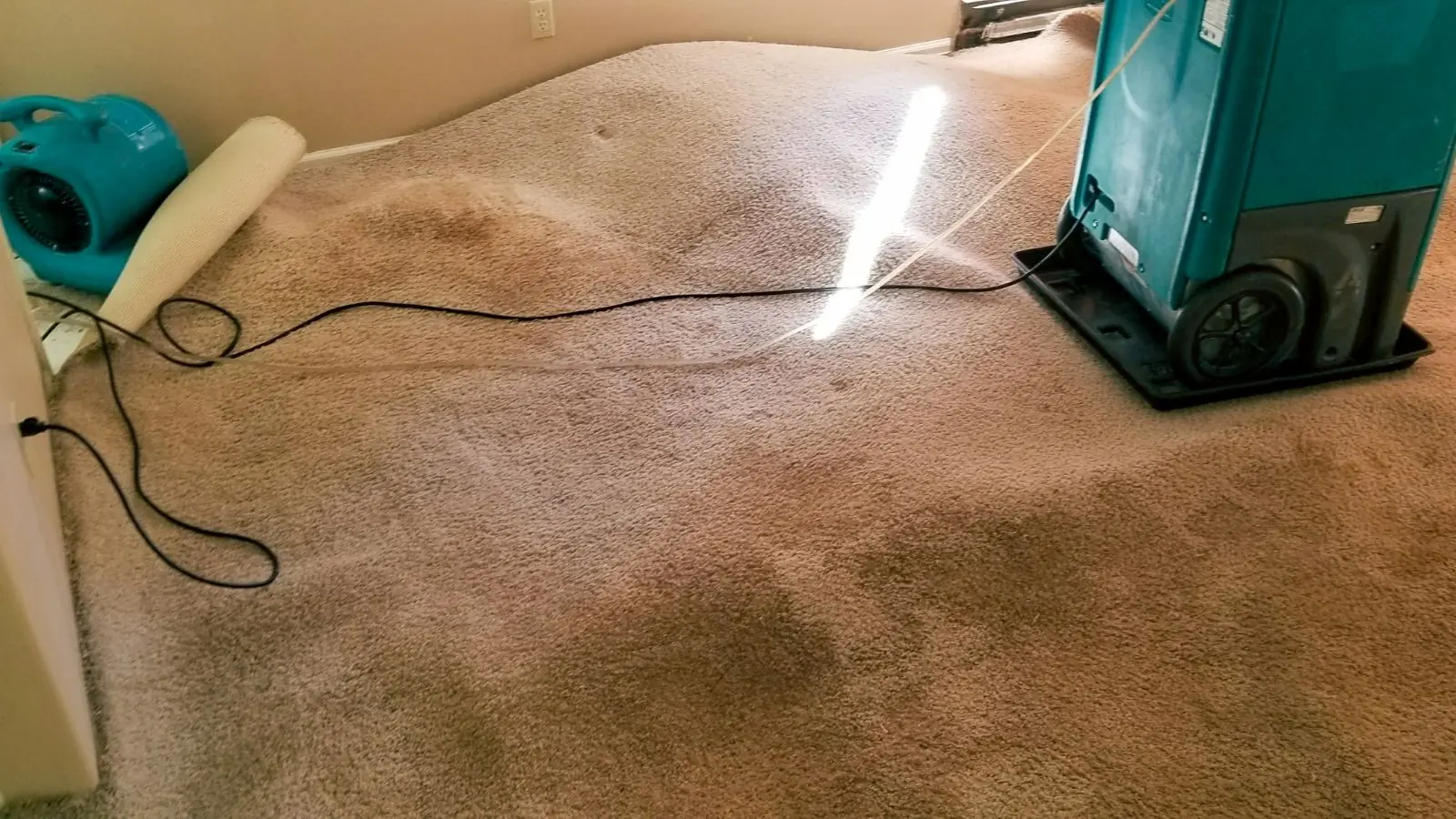
Wet carpet is easier to save than most people think, but only when action is quick. The carpet fibers dry fast, while the pad and subfloor underneath hold water. The 24/7 line is open if the floor is soaked, and starting extraction within a day gives the best odds.
Save it or replace it?
The decision depends on three things: what kind of water it was, how long it sat, and what is under the carpet. Clean water from a supply line that is caught early is a good candidate for drying in place. Contaminated water from a sewage backup or flood is different, and the carpet and pad are typically removed.
| Water type | Exposure | Usual result |
|---|---|---|
| Clean supply water | Under about a day | Often dried and kept, pad may be replaced. |
| Clean supply water | Several days | Pad usually replaced, carpet depends on condition. |
| Gray water (washer, dishwasher) | Any length | Often cleaned and dried if caught fast, otherwise replaced. |
| Sewage or flood water | Any length | Carpet and pad removed, see sewage backup cleanup. |
Why the pad and subfloor matter
Padding acts like a sponge and holds water against the subfloor for days. Many restoration crews lift the carpet at a wall, remove the pad and dry the carpet and subfloor separately. This is called floating the carpet, and it prevents the odor and mold risk that comes from a damp pad.
Tack strips and baseboards also hold moisture. A moisture meter and thermal imaging show whether the wall base and subfloor are dry, which is what actually protects the room from musty odors a few weeks later.
What to do while you wait
First steps for wet carpet
- Stop the source of water and open windows or run air conditioning for airflow.
- Remove furniture and prop up what you cannot move on foil or blocks.
- Do not walk on the wet carpet more than necessary and avoid using a household vacuum.
- Photograph the area and note how long it has been wet.
- Call the line for extraction and moisture readings.
Water still spreading while you read? The 24/7 line is open now.
Call (844) 950-6900How carpet water damage is restored
Extract
Weighted extraction wands remove water from fibers and pad.
Float or remove the pad
The carpet is lifted from the tack strip, the pad is removed, and carpet and floor are dried.
Dry and clean
Air movers and dehumidifiers dry the room. Carpet is cleaned and sanitized if it will be kept.
Reinstall
Carpet is stretched back, with new pad if needed, after readings show a dry subfloor.
Carpet and Weehawken's mix of buildings
Carpeted bedrooms, hallways and living rooms are common in apartment and condo units, and water often arrives from above. If a ceiling leak soaked your carpet, there may also be moisture in the wall base and ceiling below. See mold remediation if the carpet has been wet for several days and smells musty.
For basements, finished carpeted rooms are the most vulnerable, especially when storm water has backed up through drains. The North Hudson Sewerage Authority has described frequent basement flooding in Weehawken during intense storms. Carpet that sat in storm water or sewage is typically removed rather than dried.
Odor after drying: what it tells you
A sour or musty smell that returns after carpet looks dry usually means the pad or subfloor is still damp. Carpet cleaning alone does not fix that. A moisture meter on the subfloor and at the wall base shows whether moisture remains, and a second drying pass can solve what a surface clean cannot.
If the odor appears in a room that was never visibly wet, ask whether water traveled from a neighboring wall or a ceiling above. Stains on the underside of the carpet or pad are clues that cleaning will not cover.
Cost factors and insurance
| Factor | What it changes |
|---|---|
| Water type | Clean water allows more salvage than contaminated water. |
| Hours wet | Longer exposure raises replacement odds. |
| Pad and subfloor | Replacement pad and subfloor drying are separate items. |
| Room size | Larger rooms need more equipment. |
| Drying days | Equipment time follows readings. |
Scope and price are explained before work starts. Sudden leaks are often covered, while flood damage is usually excluded unless you hold flood coverage. Read your policy and keep photos.
The published reference behind carpet decisions
Whether carpet and pad can be saved depends on the water source and how long it sat. ANSI/IICRC S500, the published standard for professional water damage restoration, ties those decisions to contamination category and time. Clean supply water caught early often allows drying in place. Contaminated water usually means the pad and sometimes the carpet are removed.
Questions people ask
Can wet carpet be dried in place?
Sometimes, if the water was clean and removal was quick. Crews usually lift the carpet and remove the pad so both layers dry fully.
How long before mold can start?
Mold needs moisture and time, and a pad that stays damp for several days gives it both. Drying fast is the best way to avoid it.
Do you handle carpet emergencies at night or on weekends in Weehawken?
The line is open 24 hours. For an active leak or flooding, call and crews are sent the same day when available.
Will the carpet shrink or smell after drying?
Properly dried and cleaned carpet should not. Persistent odors usually mean the pad or subfloor stayed damp, which is why moisture readings are taken.
Ready to talk it through? Call the line any hour.
Call (844) 950-6900