
What bubbled paint is telling you
Paint bubbles form when the film loses its grip on the surface and something pushes it outward. That something is often water vapor or liquid water moving through the wall or ceiling. The bubble may be small and dry, or large and soft with water inside.
Moisture is common, but it is not the only cause. Painting over a dusty or glossy surface, painting in damp air or applying a coat before the last one dried can all cause bubbles. The way to tell is to look at where the bubbles are and what else is going on nearby.
Clues that point to water
Signs moisture may be involved
- Bubbles clustered under a bathroom, kitchen or laundry.
- A brown or yellow stain around the bubbled area.
- Soft or crumbling drywall when you press gently.
- Bubbles that return after you scrape and repaint.
- Peeling near the baseboard on an exterior wall.
- A musty odor in the same room.
A single bubble in a dry room may be a paint problem. A line of bubbles that follows a pipe, or a spot below a bathroom, suggests a leak. Tracing the pattern is more useful than examining one bubble.
How to check without making it worse
Look above and beside
Check the room above, the nearest bathroom and the nearest exterior wall for leaks or stains.
Press gently
A soft spot means the drywall has absorbed water. Do not poke through, because wet board can crumble.
Check for a rising pattern
Water often shows up lower on the wall than the source. Follow the stain upward.
Watch for changes
Mark the edge of the bubble or stain with a pencil and note the date. Growth means the source is active.
Call for a reading
A moisture meter can show whether the wall is wet even when it looks dry.
Water still spreading while you read? The 24/7 line is open now.
Call (844) 950-6900Why you should not just scrape and repaint
Scraping and repainting hides the symptom without addressing the cause. If the wall is still wet, the new paint will bubble again, and the drywall behind it can keep absorbing water. Painting over a damp wall can also trap moisture.
Find and fix the source first, let the material dry and confirm with a reading. After that, repair the surface and repaint. Wall and drywall water damage repair covers how drying and repair are sequenced.
Ceilings are a special case
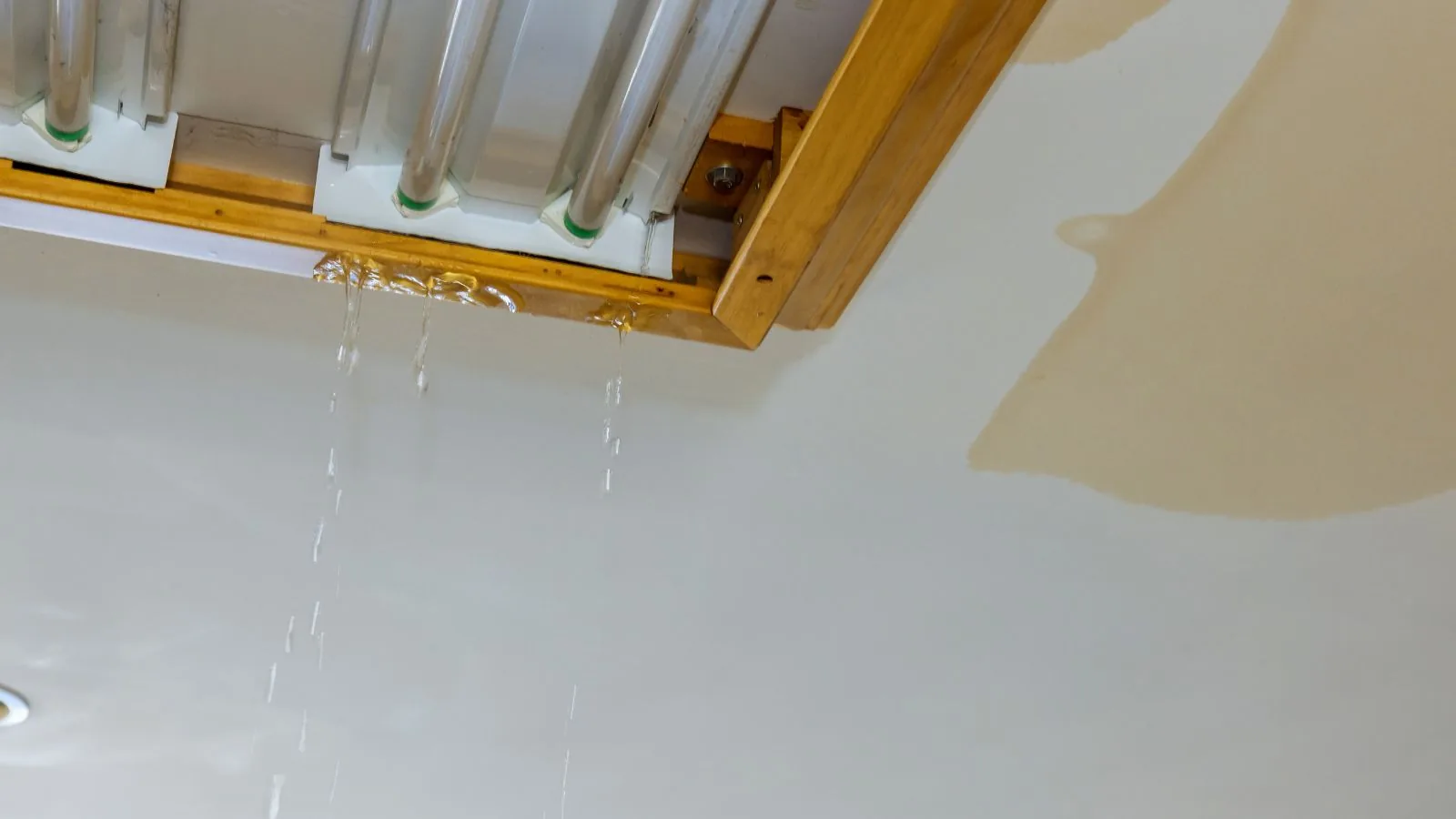
A bubble in a ceiling may have water sitting behind it. If the bubble is large and sagging, do not stand under it. A small pinhole to let water out can reduce the weight, but only if it is safe and you place a bucket below. If in doubt, leave it and call.
Ceiling stains and bubbles usually come from the floor above, a roof leak or an HVAC line. Read about ceiling water damage repair for how the source is found and the area dried.
When to call a pro
Call if bubbles keep returning, if the wall is soft, if there is a stain that grows or if you cannot find the source. Early drying costs less than repairing a wall that has been wet for weeks. A call also gets you a moisture reading, which tells you if the wall is wet.
Paint problems that look like water damage
Not every bubble is a leak. Latex paint put over an oil-based finish without primer can blister. Paint applied in a humid room or over a dirty surface can lose its grip. Direct sun on an exterior wall can also cause blistering on freshly painted siding.
The difference is usually in the pattern. Surface problems tend to show up evenly or in spots where the prep was poor. Water problems follow plumbing, rooflines and the lower edges of walls. A stain, a smell or a soft spot points toward moisture.
Bathrooms, kitchens and exterior walls
Bubbles on a bathroom ceiling often come from steam with no fan. Bubbles on a kitchen wall near the sink can come from a leaking supply line or a loose drain. Bubbles low on an exterior wall can come from moisture moving through masonry or from a gutter that dumps water against the foundation.
Fix the cause that matches your room. A fan that vents outdoors, a repaired fitting or a downspout extension can each solve a different version of the same symptom. If you cannot tell, a moisture reading narrows the search.
What repair looks like after drying
Once the source is fixed and the wall tests dry, the repair is simple. Scrape loose paint, patch or replace damaged board, apply a stain blocking primer and repaint. Skipping primer lets old stains show through, so it is worth the extra step.
Quick checks you can do today
Run your hand along the wall near the bubble and note if it feels cool or damp. Check the water meter with all fixtures off, then look again after an hour. If the dial moved, a supply line may be leaking somewhere. Check under sinks, behind the toilet and around the washer for drips.
The U.S. Environmental Protection Agency publishes guidance on moisture and household mold. It advises fixing leaks and drying water damaged materials within 24 to 48 hours, which is the same reason we suggest a quick moisture reading when paint starts to blister.
Weehawken building notes
Many Weehawken buildings stack apartments along the Palisades and the waterfront, so a bubble on your ceiling often traces to a unit above. Tell building management and photograph the area.
Older masonry buildings can also move moisture through exterior walls. Neighbors in Jersey City and Fairview see the same patterns, especially near the baseboard on outside walls.
Questions people ask
Does bubbled paint always mean water damage?
No. Poor surface prep and damp air during painting can also cause it. Look for stains, soft spots and bubbles that return.
Is it safe to pop a bubble in the ceiling?
A bubble that holds water can be heavy. If you are unsure, leave it and call. If you release it, place a bucket below and stay out from under the area.
Can I just repaint over it?
Not until the cause is found and the wall is dry. Painting over a damp wall tends to bubble again.
How do I know if the wall is wet?
A moisture meter gives a reading. Our crew uses one, and you can ask for a reading when you call.
Who handles a leak from the unit above?
Tell building management in writing. Your lease or association rules and insurance decide who pays.
Questions about your own situation? The line is open 24/7.
Call (844) 950-6900