
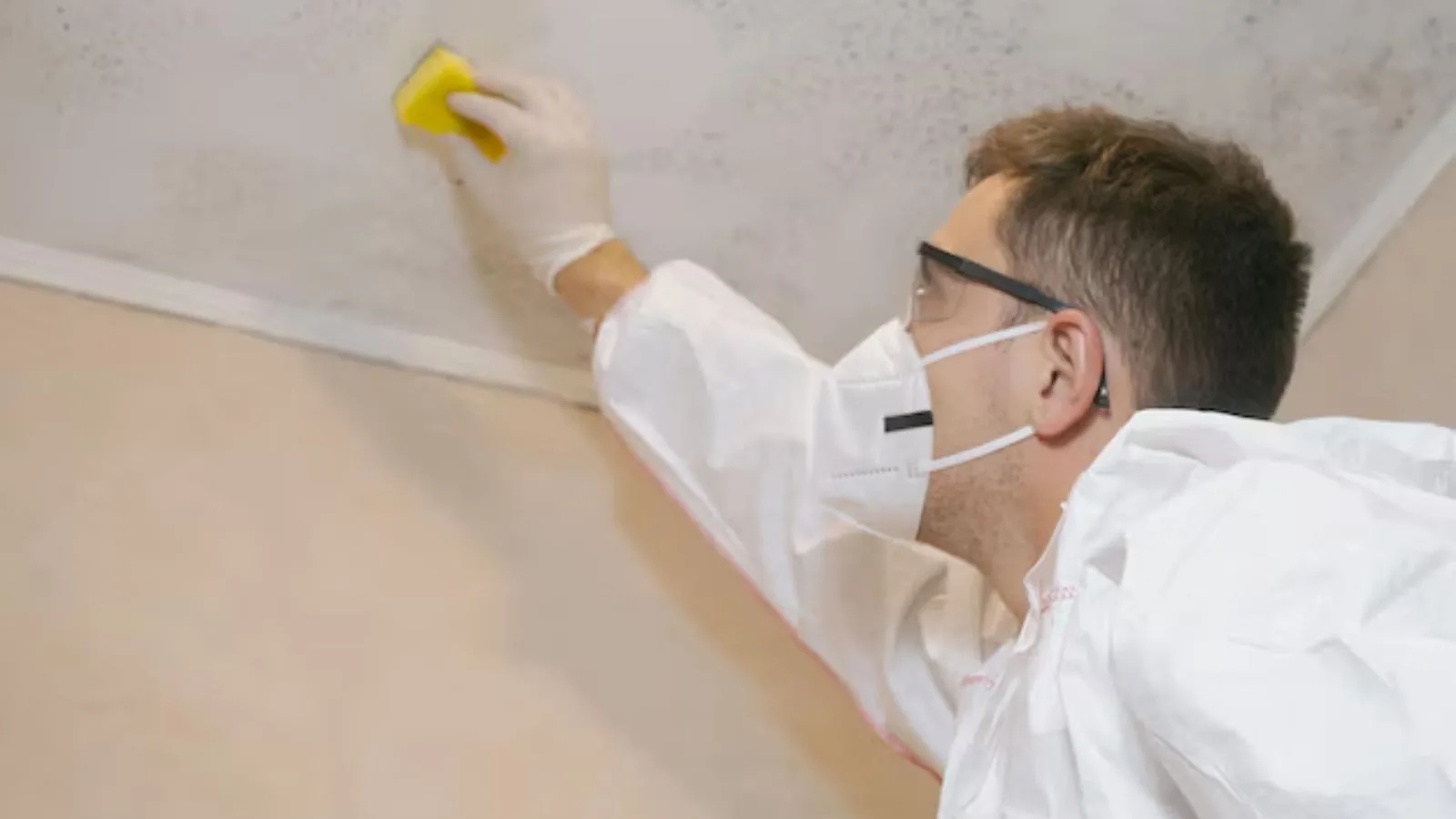
What people mean by natural mold removal
When people search for natural mold removal, they usually mean household items such as white vinegar, baking soda, hydrogen peroxide or tea tree oil. These are widely used for light surface cleaning. They are not a substitute for fixing the moisture source, and they do not work equally on every material.
Mold grows where there is moisture and something to feed on. That means the real fix is finding why the area is damp and drying it. Cleaning a surface without fixing moisture leaves the conditions in place for mold to return.
Where natural cleaners can help
Reasonable uses for small, hard surfaces
- Tile and grout in a bathroom.
- Glass, sealed metal and some plastics.
- Sealed countertops and painted trim with light staining.
- Shower curtains and bath mats that can be washed.
On these surfaces, white vinegar applied and left to sit, then wiped and dried, is a common approach. Baking soda paste can help scrub grout. Always dry the surface completely afterward, because leftover dampness defeats the purpose.
Where natural cleaners fall short
Porous materials such as drywall, ceiling tile, carpet pad and insulation absorb moisture and hold growth below the surface. A cleaner applied to the top does not reach what is inside. Those materials are often removed rather than cleaned, particularly when they have been wet for a while.
Large areas also call for a different approach. If growth covers a sizable section of wall or ceiling, or has come back after cleaning, treat it as a moisture problem and contact a professional. Our mold remediation page describes how containment and removal are handled.
Water still spreading while you read? The 24/7 line is open now.
Call (844) 950-6900Safe handling basics
Ventilate
Open a window or run a fan to the outside while cleaning. Do not mix cleaning products.
Protect yourself
Wear gloves, eye protection and a mask that fits well. Keep children and pets out of the room.
Apply and wait
Spray vinegar on the surface and let it sit for the time on the label or about an hour.
Wipe and dry
Wipe with a damp cloth, then dry the area fully with towels and a fan.
Dispose properly
Seal used rags in a bag before discarding them.
Never mix vinegar with bleach or other cleaners. Mixing chemicals can create harmful fumes. If you are unsure about a product, read the label.
Fix the moisture first
Common sources include a leaking pipe, a roof leak, condensation on cold surfaces and poor ventilation in a bathroom. A dehumidifier can lower indoor humidity, and a bathroom fan that vents outdoors helps. If the source is a leak, repair it and dry the area.
A moisture meter tells you if a wall or floor is still wet. Structural drying and dehumidification explains how professionals check and dry materials. Without that step, surface cleaning is temporary.
When to stop and call
Call a professional if the affected area is large, if it keeps returning, if it follows a flood or sewage event or if building materials feel soft. Do not disturb a large area by scrubbing, because that can spread material through the home.
Other household products people ask about
Hydrogen peroxide at drugstore strength is sometimes used on light surface spots. Baking soda mixed with water is mild and can help with scrubbing. Tea tree oil is often mentioned, but it is strong and expensive, and results vary. Test any product on a hidden spot first, because some can stain or lighten paint.
None of these replaces fixing moisture, and none is a sure fix. Treat them as cleaning aids for small areas, not as a way to deal with a larger problem.
Why porous materials are different
Mold on a bathroom tile is on the surface. Mold in drywall, wood or fabric can extend into the material. Cleaning the visible part leaves what is inside, which is why professionals remove soft or heavily affected material instead of treating it with a spray.
If you press on a wall and it feels soft, or if the stain returns a few weeks after cleaning, the problem is bigger than a surface wipe. That is the point to get readings and a plan.
Keeping it from coming back
Lower humidity with a dehumidifier or air conditioning, run exhaust fans during and after showers and wipe condensation from windows. Keep closets from being packed tightly against exterior walls. Fix leaks within days, not weeks, because moisture left sitting is what invites growth.
Fabric, wood and stored items
Washable fabrics can usually be laundered on a hot cycle with detergent and dried completely. Stored cardboard, books and upholstered furniture are harder, since they absorb moisture and hold growth inside. Decide what is worth saving and what is easier to discard, and photograph anything you throw out if it relates to a water loss.
Wood furniture with light surface staining can sometimes be wiped and dried in the sun. Unfinished wood framing in a basement is a different job and is better handled by a crew that can dry the space first.
A realistic plan for a small spot
Decide first whether the spot is small, on a hard surface and linked to an obvious cause. If so, fix the cause, clean the surface and dry it. Check the area weekly for a month. If nothing returns, the problem was handled.
If the spot returns or grows, stop cleaning and look deeper. The moisture is still there, and a reading will show where. That is the time to bring in help and avoid repeating the same effort.
Reading product labels with care
Natural does not always mean harmless. Some oils irritate skin, vinegar can damage certain stones and finishes, and hydrogen peroxide can lighten fabric. Read the label, test in a hidden spot and wear gloves. If a product warns against use around pets or children, follow that guidance.
What not to do when cleaning mold
Cleaning cautions
- Do not mix vinegar, bleach, ammonia or other cleaners.
- Do not scrub dry growth, which can spread it.
- Do not use a fan that blows across the area into other rooms.
- Do not paint over damp or stained material.
- Do not clean large areas yourself.
The EPA's published guidance on mold cleanup advises fixing the moisture problem and drying materials. It also suggests that small areas are the ones occupants may handle, so use that as your guideline for when to stop.
Humidity and Weehawken buildings
Many Weehawken residents live in multi-unit buildings with shared walls. A bathroom without a vented fan is a common starting point for dampness, so ask your building manager about ventilation.
Residents in Jersey City and Ridgefield report similar bathroom and basement dampness. Check the area for a leak before cleaning.
Questions people ask
Does vinegar kill mold?
Vinegar is widely used on small hard surfaces, but results vary and it does not fix the moisture source. Dry the area fully afterward.
Can I clean mold on drywall myself?
A small surface spot may be wiped, but drywall absorbs moisture. If the board is soft or the area is large, call a professional.
Should I mix vinegar and bleach?
No. Never mix cleaning products, because the combination can create harmful fumes.
Why does mold keep coming back?
Usually because the moisture source is still there. Find and fix the leak or humidity, then dry the area.
When should I call a professional?
Call if the area is large, if growth returns, if materials are soft or if it follows flooding or sewage.
Questions about your own situation? The line is open 24/7.
Call (844) 950-6900